Home made masks

Tidying up and throwing away a lot of my old cloth masks, I came across these, the first fitted masks I made during the hard lockdown. This was the best pattern I could find, top stitched, with a pocket for a filter and a wire for the nose piece, made out of a paperclip.

I think I’ll keep these for the memory, even though the memory is kind of painful.

hree home made cloth masks with cloth ties. One pink with a white floral pattern, one dark green with yellow lining, and one green with white dots.

So you might be autistic but how can you know for sure?

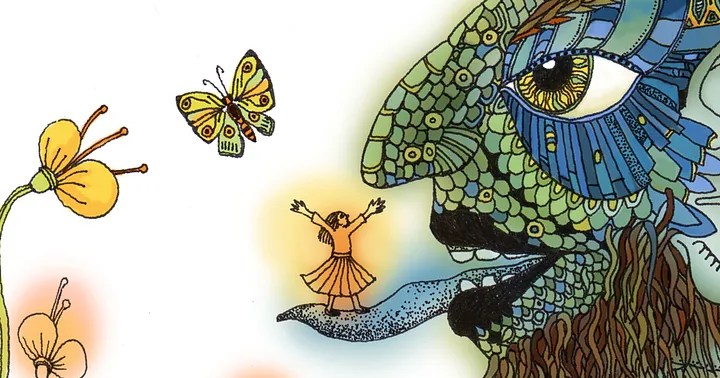
A drawing of a small person in a skirt standing on the tongue of a multicoloured, scale-covered bearded giant who's looking at a butterfly hovering over a flower.
Illustration: Explaining a butterfly to a giant

Here’s some advice for anyone who thinks they might be autistic but aren’t sure where to go from there. You might have done some online tests, like the RAADS H and read the DSM5 or ICD11 diagnostic criteria. And very probably you’re still not sure. Maybe you’re wondering if you should get screened for official diagnosis, which is intimidating process, can be expensive, and inaccessible to many.

I’ve been there, and here’s what I discovered: I don’t need an *official diagnosis that I’m autistic* to be sure that I’m autistic.

Fun fact: even officially diagnosed autistic people suffer from autistic impostor syndrome. For many, an official diagnosis of autism doesn’t provide the clarity they seek. They still wonder whether or not they were diagnosed correctly. Maybe they’re unconsciously faking their traits? Maybe something else is wrong?

So what then?

Unless you need accommodations for work or school, it’s more important to know whether or not you are autistic, than to get officially diagnosed as autistic.

I was lucky to have a psychologist who supported me in my self diagnosis journey. But what helped me most was spending time in autistic spaces online. For the first time in my life (and I’m 51 years old so that’s quite a lot of life) I met people who understood me.

Before I started talking to autistic people, there were so many parts of myself that seemed out of focus. I simply didn’t understand what was going on. I’d never met anyone else who spoke about those things.

Seeing person after person saying “yes, this exact same thing happened to me too, this is how it feels to me as well” was amazing. My understanding of myself snapped into focus.

For example, the autistic tests ask whether you copy characters on TV, to know how to socialise. That’s autistic scripting. I thought I didn’t script, because I didn’t copy TV characters.

But by interacting with other autistic people I realised that scripting is so much more than copying people on TV. That thing where I rehearse interactions with people beforehand? That’s scripting. Or where I quietly rehearse a phone call before I make it? Scripting.

Where are these autistic spaces? On mastodon there’s the actually autistic group @actuallyautistic@a.gup.pe and the #ActuallyAutistic hashtag.

On reddit, there’s r/autisminwomen which despite its name is not just for cis women, but open to trans and nonbinary as well. r/autism is also good, although there are some gatekeepers who disparage self diagnosis, so be aware.

If you are looking for resources for autistic adults I’ve collected a list of articles I’ve found useful here: Resources for adult autistic people

Drawing of yellow and blue flowers.

If you’re wondering whether autistic self diagnosis can ever be accurate:

Autistic self diagnosis is valid.

That’s not just a polite way to say “we will hesitantly accept self diagnosis while holding our noses” it means that you can accurately diagnose yourself as autistic.

The autistic diagnosis process is highly subjective and the reason why it requires a trained and experienced professional, is because the things that differentiate autistic traits from the traits of mental health conditions are very difficult to determine from the outside.

It’s the internal experience of these traits that determines what they are, and it’s difficult for a person to accurately judge another person’s internal experience.

You don’t have that problem. You have direct access to your own internal experience.

Getting an official diagnosis can be useful if you need accommodations for work or school, or if you won’t feel confident that you really are autistic without the validation of an official diagnosis.

Some people find an official diagnosis reassuring, some carry on doubting that they are “really autistic” even with an official diagnosis, so it really depends on your needs.

Some people hope a diagnosis will convince their family to take them seriously and believe that they are autistic. That doesn’t always work out, as people have an apparently infinite capacity to resist believing uncomfortable truths.

It’s also possible that you may be autistic, and still not get an accurate autism diagnosis because the diagnostic process is deeply flawed, especially for adults, people who were assigned female at birth, people who were assigned male at birth but don’t fit the masculine stereotype, and people who are not white.

If you just need to know whether or not you are autistic, the alternative to an official diagnosis, is informed self diagnosis. That is, doing your own research, and if you feel you need an outside perspective, consulting a therapist who is knowledgeable about neurodivergent people.

The University of Washington Autism Center says:

In our experience at the University of Washington Autism Center, many professionals are not informed about the variety of ways that autism can appear, and often doubt an autistic person’s accurate self diagnosis.

In contrast, inaccurate self-diagnosis of autism appears to be uncommon. We believe that if you have carefully researched the topic and strongly resonate with the experience of the autistic community, you are probably autistic.

If you want to learn more, here is an article that explains different aspects of self-diagnosis.

And to end with, a quote from Embrace Autism about Autistic self doubt and Autistic Imposter Syndrome:

We are lateral thinkers. Our superior lateral abilities generate multiple relevant possibilities for any problem. So we hypothesize what we might actually be and come up with many alternatives. Even if autism perfectly describes us, we may still have doubts because some of our behaviors can be attributed to other conditions.

A drawing of a person peering out of the eye-hole of a dog shaped mask covered in patterns.

Accessibility Voice Over Free Guy

I had such a strange experience watching the movie Free Guy on the flight back from Istanbul.

As the movie started, there was a voice over describing everything that happened. I thought that I’d accidentally switched on an accessibility feature, but there didn’t seem to be any way of disabling it. Then I remembered the Mark Kermode review of the movie, in which he commented that the constant voice over actually worked for him.

So I watched it like that, and it was quite interesting, I thought the constant voice over description added to the virtual world /real world layering of the plot, and it was like being able to hear the thoughts of the main character, especially the times when the description was slightly ahead of the action.

But later I went to check the Kermode review, and it turns out my memory was fake. And now I’m fairly sure that the voice over was an accessibility feature, that I must have switched on accidentally!

A water bottle tucked into a pocket on the back of a airplane seat catches the early morning sunligh
Sunrise glowing in a water bottle as our plane flew over Kenya

Compassionate Practice

Listened to the “Compassionate Practice” episode of the Neurodivergent Woman podcast – useful for ND people of all genders. They discuss CFT – Compassion Focussed Therapy. Some things that really stood out for me: Anger and compassion are related and intertwined.

Also, the concept of the three systems that regulate our emotions – Threat, Drive, and Soothe. Each system is important, but it’s easy to fall into using “threat” or “drive” systems to regulate yourself rather than “soothe”.

Very briefly, the Threat System is when we use anxiety to motivate ourselves, and results in heightened adrenaline and cortisol.

Drive System is when we chase dopamine – exercise, playing games, getting into arguments (anger releases dopamine too).

Soothe System is activated by being compassionate, doing soothing activities that release serotonin or oxytocin. Cuddling with a pet, reading a good story, having a warm bath, listening to nature sounds etc.

Each of these can be very useful – being a bit anxious about a deadline can help you meet it, for example. And going for a run or cycle, or playing a game to you enjoy is also good and useful.

But it’s easy to fall into unbalanced habits and rely on Threat and Drive only, and neglect Soothe.

The podcast has some practical examples of how to activate that soothe drive, but here are some of mine:

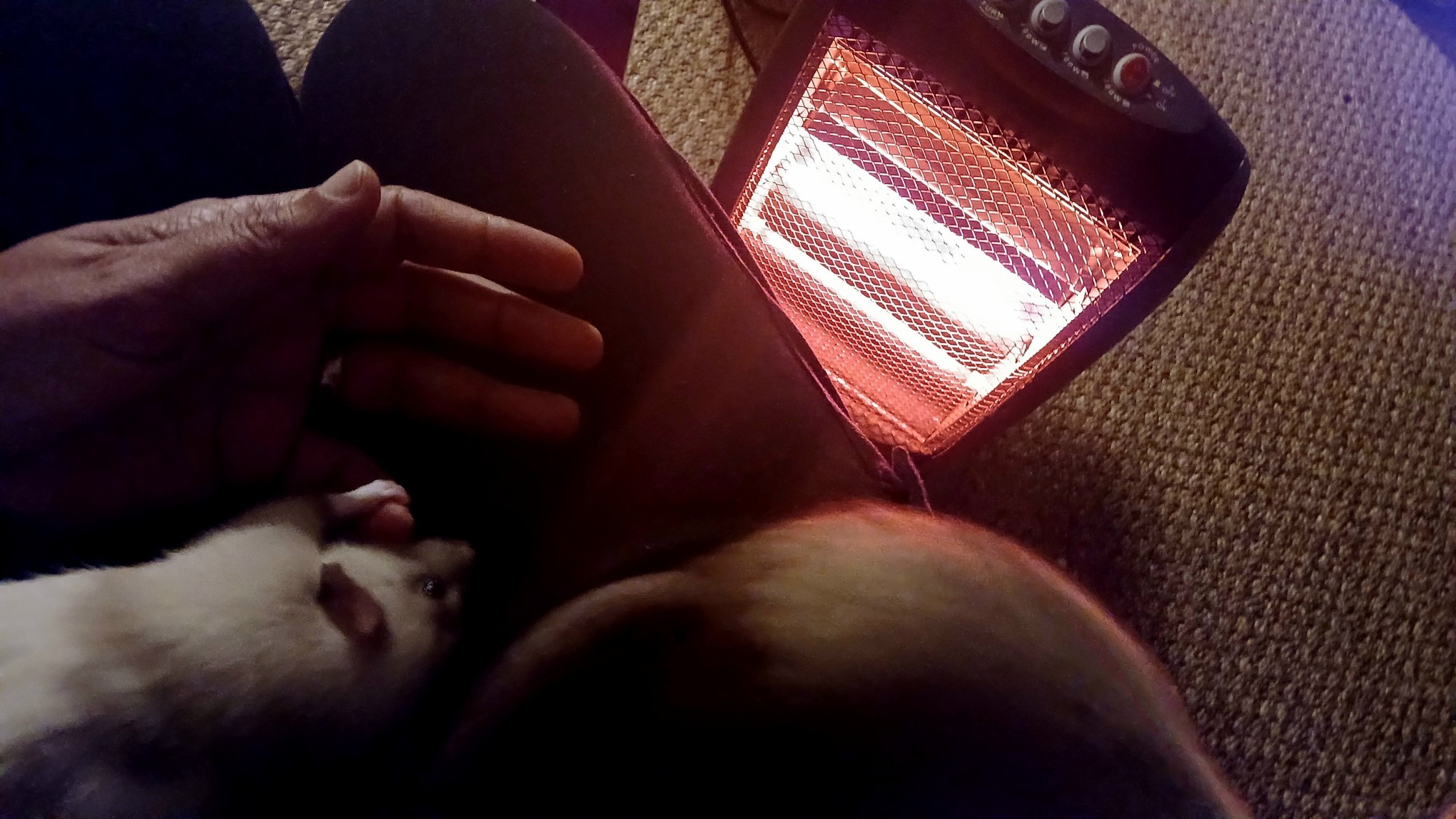
Me sitting in front of a glowing infrared heater with two rats on my lap. One of them has hold of my little finger and is cleaning it.

Sitting in front of a heater with my rats. This is Dash, giving me a manicure.

A white table with a number of small, multicoloured, rounded pebbles arranged by colour from olive green to rusty red, through cream, pink, and grey.

Sorting things by colour. These are pebbles I picked up on a beach in Datça.

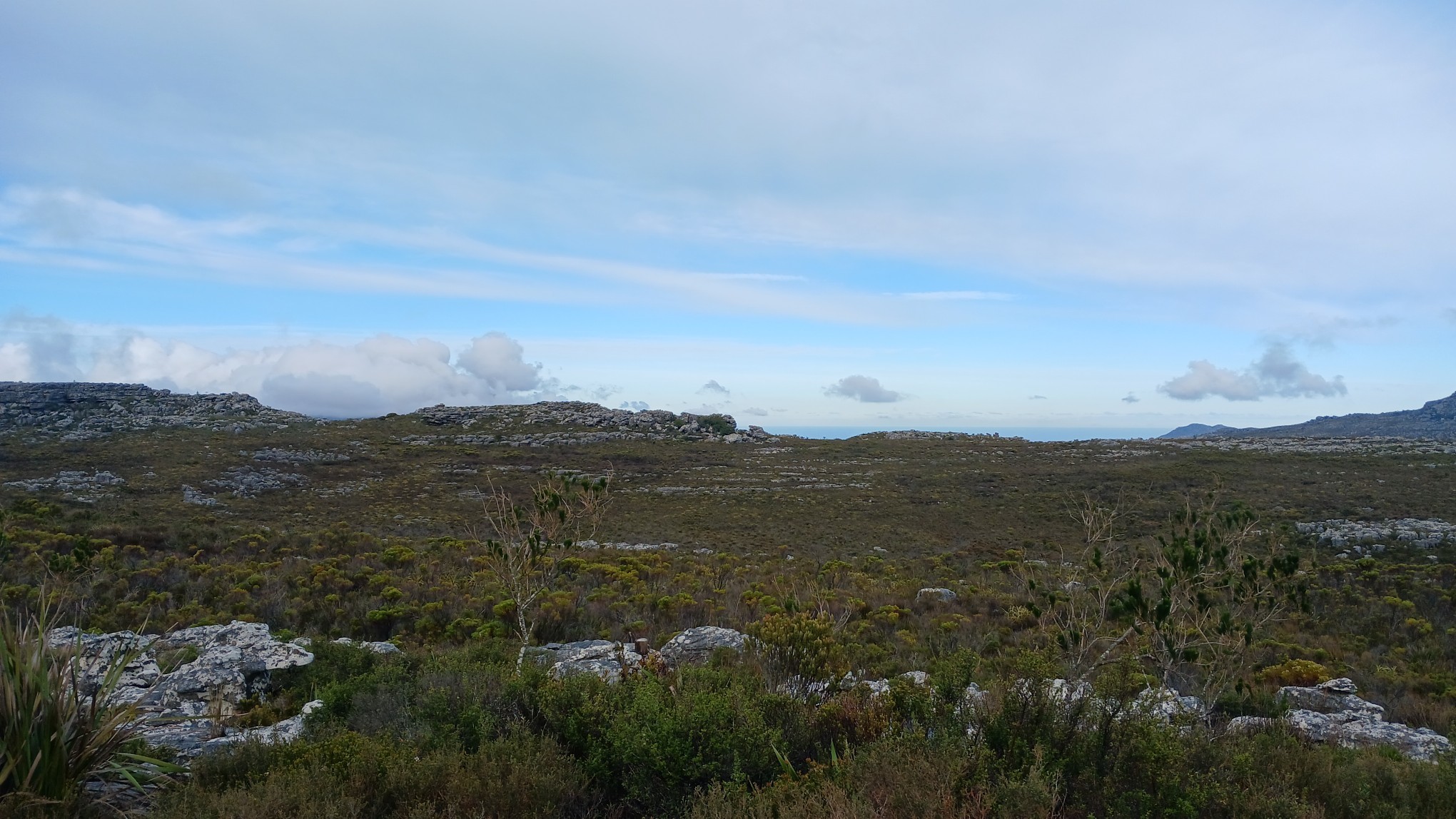
A stretch of fynbos shrubs under a pale blue sky streaked with clouds.

Being outside in nature. This is a view of the top of Constantia Neck, just before the reservoir.

When Seeing A Good Friend In Public

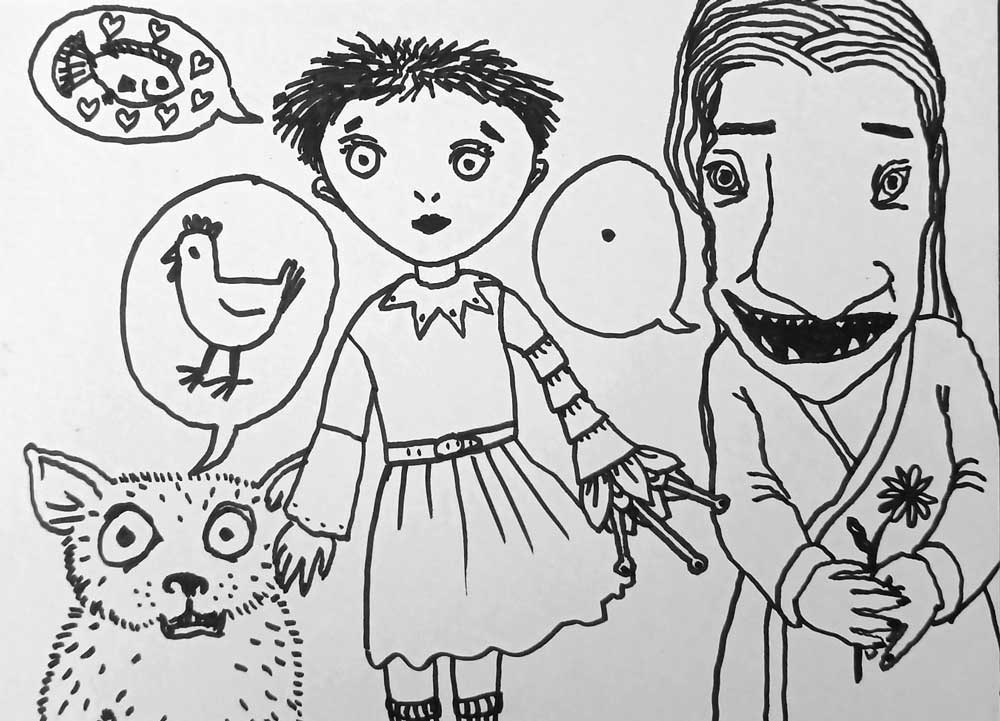
Black and white line drawing. Two people and a hairy cat like creature with big eyes. The cat like creature has a speech bubble containing a chicken. One of the people has short hair and a wistful expression, and one of her hands is a flower.

Autistic thoughts when seeing a good friend unexpectedly in public:

OMG that’s Friend, yay!

They’ve spotted me, can’t hide. Initiate greeting.

OK, greeting is complete, now what do I say?

Was that a strange thing to say?

How long should this conversation last?

OK that was an odd thing to say, they’re looking confused.

Would it look rude if I say “Bye” and walk off now?

How should I end this conversation?

Do they still want to talk or are they trying to end this conversation?

Should I start talking about that thing, or will it take too long?

Maybe I should start end-of-conversation-sequence or is it too early for that?

OK looks like it’s wrapping up.

I think

Yes! Conversation is ending. Initiate end-of-conversation-phrases and timing.

Conversation successfully ended. Walk away.

Why did I say that thing?
Did they think that I was being odd?
Why did I say that thing?

Resources for Adult Autistic People

I recently realised that I’m autistic. Here are the resources I found valuable in figuring out what this means. All of these links are about autism in adults, which can be a challenge to find. Where possible I’ve prioritised resources created by neurodivergent people. 

Who is on the Spectrum?

Why it’s nonsense to say that everyone’s a little bit autistic

One of the distinguishing features of autism is what the DSM-V calls an “uneven profile of abilities.” There’s a reason people like to say that “if you have met one person with autism, you’ve met one person with autism.” Every autistic person presents slightly differently.

That’s because autism isn’t one condition. It is a collection of related neurological conditions that are so intertwined and so impossible to pick apart that professionals have stopped trying.

The Neurodivergent Woman podcast: Overlap between Autism and ADHD

Self Diagnosis, Misdiagnosis and Imposter Syndrome

Reasons why autistic people self diagnose

The medical system has long focused on young, white boys — at that, often cisgender, heterosexual, and from families with money — who exhibit very specific autistic traits when it comes to research, diagnosis, and accommodations. This excludes everyone else, and means the most prevalent information we have only helps part of the community. As a result, the more intersections of oppression an autistic person exists are, the more difficult it can be for them to get a professional diagnosis.

Self Diagnosis: but isn’t it harmful?
Self diagnosis is not a uninformed, spontaneous decision. It is not done without thoroughly educating oneself first.

Why it’s helpful to know whether or not you are autistic
Instead of looking over strengths and challenges and feeling strange or different from others but not knowing why, they gain a system for understanding certain patterns of feeling and responding.

Adult autistic people are frequently misdiagnosed as having mental health conditions before they’re diagnosed as autistic
This post is about the hundreds and thousands of autistic people who are misdiagnosed everyday by psychiatrists, psychologists, and other professionals.

Aging with Autism

Seniors across the country deal with numerous physical and mental health conditions every day that have been heavily studied, but there is not nearly as much research on the experience of those who are on the spectrum. Better understanding what autism looks like in seniors and how it may impact their lives can help make a difference for both them and their families.

How to deal with autistic imposter syndrome
Many of us who are autistic have had that sinking feeling that we may have been faking autism in some way, misappropriating a diagnosis that we do not deserve or fearing we have been misdiagnosed.

Interacting With Others: Masking, Empathy and Social Anxiety

Thin Slicing: Autistic people and first impressions
Thin slice judgements are those first-impressions that people make that continue to define and influence how a person feels about someone. Research has shown that these judgements are disproportionately negative for autistic people and that non-autistic people have an instant dislike of them.

Autistic Masking
Masking is a social skill that persons with autism adopt in social settings in which non-autistic people expect non-autistic behavior. Examples include faking eye contact, mirroring, minimizing, and disguising behaviors and feelings. Autism masking has been documented to cause stress, depression, and other mental health and identity issues.

Double empathy problem: miscommunication is a two way street

How autism may affect sympathy and empathy
Research into the link between autism, empathy, and sympathy has evolved over the past 40 years. Initially, it was believed that a lack of empathy and sympathy was a universal trait of autism, but more recent research indicates that this varies among individuals with the condition.

The questions of whether people with autism truly empathize or sympathize with others, what stands in the way of a traditional response, whether this can be taught, and whether an apparent lack of empathy or sympathy really reflects a lack of emotional connectedness are more nuanced than early research suggests

How to tell the difference between social anxiety and autism

Neurodivergent insights on the overlap between social anxiety and autism

Managing the kind of social anxiety that autistic people can have

Regulating Emotions and Sensory Input

Autism, interoception and alexithymia
Many of the stereotypical assumptions about autism (for example, that we struggle with empathy, theory of mind, emotional identification, and reciprocity) are actually better explained by alexithymia and are not intrinsic to autism itself. Today’s article will provide an overview of the Autism-Alexithymia overlap and then talk about the differences between autism and alexithymia. First, let’s dive into the overlap.

Strategies for improving poor interoception
To put it simply: a person can not consistently self-regulate when their interoception system is dysregulated. As a Psychologist, I learned so many “emotional regulation strategies” that often seem misattuned to my neurodivergent clients. It wasn’t until I learned what interoception is that I began to connect the dots. Many of the emotional regulation strategies that I had learned do not effectively work when there are underlying interoception issues. For this reason, it’s important to consider interoceptive awareness as part of any therapeutic work.

How to Improve Vagal Tone and Why It’s Important
We all want to be more present, flexible, and grounded people. Sometimes, it seems that it comes so naturally for some people, while many of us struggle everyday. If that sounds like you, I’m here to tell you that there’s a reason for this and that you can become more grounded and engaged, too. Specifically, we do this by learning how to increase our vagal tone.

How To Meditate When You Can’t Sit Still

If you would like to meditate but think that you can’t, or you’ve tried and found it really difficult, this blog post is for you. I’m writing with autistic and ADHD folks in mind, who can often find it particularly challenging even though we’re often recommended it to help our wellbeing.

Neurodivergent Woman podcast: Alexithymia and Interoception

Stimming. What it is, and why it’s important and beneficial

Neurodivergent Woman podcast: Repetitive Behaviours

The benefits of autistic special interest
But it’s only in the past decade or so that autism professionals have begun to recognize the value of these intense interests that emerge in early childhood. Clinicians have historically called them circumscribed interests, and they belong to the category of diagnostic criteria for autism called “restricted, repetitive patterns of behavior, interests or activities,” which also includes movements such as hand-flapping and an insistence on rigid routines. A distinguishing aspect of special interests is their intensity: They can be so absorbing that they are the only thing the person wants to do or talk about.

Autistic and ADHD nervous system and stress response: increasing the window of tolerance

Music and the Vagus Nerve
The vagus nerve is in close proximity to the ear, through which we hear sound and music. When we listen to music, the vibrations of the sound resonate in the eardrums before traveling through the vagus nerve. Since the vagus nerve is associated with important physical functions like heart rate, taste, swallowing, and digestion, it’s closely related to the “rest and digest” PNS. When the vagus nerve is activated, it stimulates the PNS and sends a signal that it’s time to relax.

The needs of Autistic Library users
Autistic individuals are more likely to visit a public library than any other group and those with autism who do go to the library visit libraries twice as often. However, an autistic individual can feel shamed by those who do not understand their strange behavior or may become overstimulated by the library’s environment. Libraries and library systems that want to become autism-friendly can start by becoming educated on the challenges people with autism face and ways they can help. 

Autism and differences in stress responses, the sympathetic nervous system

Vision and hearing challenges with vestibular disorders
Interestingly, some patients with a vestibular disorder may also experience photosensitivity (discomfort with bright light) and other vision problems such as: intense discomfort with flickering lights, particularly fluorescent, sodium, or mercury vapor lights, moving objects, rows of similar objects, such as in grocery store aisles or lines of text on a page, or busy, high contrast patterns, such as polka dots or sunlight filtering through mini-blinds.

Hyper and hypo sensitivity to the 8 sensory systems

Video on the differences and overlaps between autism and ptsd 

Neurodivergent Woman podcast: Trauma

Autism and PTSD
Given the high rate of co-occurrence, it is more likely that missed diagnosis happens (vs. misdiagnosis). A missed diagnosis happens when a person’s PTSD is accurately diagnosed while their underlying neurotype (autism) remains missed. When they do co-occur this creates some additional complexity in the clinical presentation.

Demand Avoidance,
Autistic people may avoid demands or situations that trigger anxiety or sensory overload, disrupt routines, involve transitioning from one activity to another, and activities/events that they don’t see the point of or have any interest in.

Persistant Drive for Autonomy, an alternative view of Pathological Demand Avoidance.
The core of PDA is an anxiety-driven need for autonomy. PDA causes someone to avoid demands and expectations for the sole purpose of remaining in control. When faced with a demand (even a really minor one), PDAers can have extreme reactions.

Neurodivergent Woman podcast: Pathological Demand Avoidance

Rejection Sensitivity Dysphoria in Autism and ADHD
Rejection Sensitive Dysphoria, or RSD for short, is a common issue experienced by Neurodivergent (ND) people. It is thought to be caused by increased difficulty in regulating our emotions, which leads to an incredibly heightened experience of rejection.

Echolalia and other echo phenomena from the point of view of an autistic person

Neurodivergent Woman podcast: Neurodivergence and Therapy

Neurodivergent Woman podcast: Executive Functioning

Scorched

I recently discovered that I am autistic. One of the decisions I’ve had to make was whether or not to pursue official diagnosis. Writing this story helped me process some of the difficult emotions I’ve had to deal with.


“Okay. Here we are, then.” Monica pulled the car to a gentle halt. “Now, you’re sure—”

Appel already had her seat-belt unbuckled. She suppressed her impatience as her mother put a hand on her arm.

“Sweetheart, you’re sure-sure that you don’t want me to come in with you?” Monica said earnestly. “You know I don’t mind…”

Click click click click click click click.

The turn indicator was still on, the sound nagging at Appel’s attention. 

“It’s fine, Mom.” It took an effort to keep her voice calm and relaxed. She smiled and glanced at her mother’s eyes, establishing that moment of intimacy she knew Monica expected and valued.  “I need to learn to do these things by myself, don’t I?”

“That’s true.” Monica gazed at her daughter, anxiety radiating off her so strongly Appel wanted to lean away from her. “You’re right. I just want you to know that—”

It took an effort for Appel not to say the words out loud along with her mother. “— that everyone’s a little bit magic, and no matter what the tester says, you’re still my daughter, and I love you.”

“Thanks, Mom. I know.”

“Just so long as you remember that, sweetheart.”

 Appel did not wince when her mother stroked her hair back from her face.

Click click click click click click.

To Appel’s immense relief, the driver behind them gave an impatient bip on their hooter.

“Got to go now, Mom.” Seeing the strain in her mother’s face, she relented a little. “Love you too, Mom. Don’t worry. I’ll be okay.”

Before Monica could say anything else to delay her, Appel got out of the car, and closed the door firmly. 

The other diver hooted again, and, after one last wave and a blown kiss, Monica pulled away.

Appel turned to face the building. 

This was it.

She’d seen the Institute often enough, but had never gone inside it. 

She climbed the wide steps to the entrance, half expecting the security guard to stop her, but the man just gave her a cursory glance and waved her through.

Excuse me, where do I go for Magical Potential testing?” Appel recited under her breath.

She’d rehearsed that question many times, and had it ready to use, but to her relief she did not need to approach any of the strangers in the foyer. 

A big sign listed all the venues, and there it was, the information she needed, third row from the top: Assessment, Testing and Diagnostics for Magic Potential: Room 1005

Appel found her way easily along the corridors. The doors were all numbered, and it was easy to see where she was meant to go. 

She saw a few other people, all dressed in standard grown-up office clothes. None of them gave her so much as a second glance, and none came close enough for her to get more than a whiff of their emotions.

As usual, she held her breath to avoid absorbing too much, but she could still sense them. Wafts of distracted calculation and the low level grumbles of petty irritation.

At least she blended in. Monica had been right to insist that Appel should wear her most grown-up, boring clothes.  A white blouse, and a narrow, grey skirt, stockings, and neat black shoes.  

Appel had resisted. She despised wearing stockings, hated being constantly aware of the waistband digging into her, hated the way her skirt swished over her stockinged legs with every step. But she had to admit that these clothes were right for this place. Nobody gave her so much as a second glance.

The door to room 1005 stood open. The receptionist looked up as Appel hovered on the doorstep. “Can I help you?” 

Appel approached the desk and held out her application form. 

The receptionist took the form, glanced through it, then up at Appel.“This is for you?”

Appel nodded.

The woman read the form over again, then typed something into her computer. She radiated a steady, competent hum. Out of habit, Appel stepped back out of range, to a distance where she was no longer aware of the woman’s emotions, and took the opportunity to study her surroundings. 

The room was disappointingly normal. It had a beige wall-to-wall carpet, and soft off-white walls. Several people were seated on the row of plastic chairs. Three boys, and three women.  

 “This seems to be all in order.” The receptionist placed Appel’s form in a file. “Please take a seat. Doctor will call you when he’s ready to see you.”

“Thank you,” Appel whispered, and chose the closest chair.

Everyone was looking at her, so she kept her eyes down so that no one would feel obliged to speak to her.

After a few moments, when no one showed any signs of intruding on her silence, she risked another quick glance around the room.

The boys were all at least ten years younger than Appel. Each sat next to a woman Appel guessed must be their mother.  

Each boy’s hands and arms were wrapped in chokes, the soft but strong spell-damping chords that would keep them from accidentally sparking.

The boy closes to Appel, a delicate, round-faced child with big, brown eyes, leaned against his mother, and she had her arm around him, her fingers playing absently through his fine hair.

They were close enough that Appel could pick up the woman’s thoughts, a gentle flow of comfort and warm scents. Clean cotton, drying in the sun. A book fitting cleanly back into its place on the shelf. And under it, a subtle rasp of worry, stopping and starting, like the gnawing of a small animal.

Nothing from the boy, of course, because of the chokes. 

Appel looked furtively at the carefully knotted chords. She wondered what it was like to wear them.

She’d never asked her parents why they hadn’t bought her chords. Maybe it was because they were so expensive? Or maybe it was because they were mostly a boy thing. 

Appel knew better than to ask them. Spell chords were one of the many things that were Not To Be Discussed. Especially not with Monica. Sometimes Appel thought that her mother considered chords as vulgar and flashy, in the same way she scorned those who wore make-up or flashy clothes.

People like us don’t need to show our value.

But sometimes, she sensed there was something more to it. The few times she’d sensed  Monica’s thoughts on chords, they had had that flavour of judgement she reserved for people who caught mice in glue-traps.

Ignorance does not excuse cruelty.

Appel shifted in her seat, trying to ignore the constricting waistband of her skirt. Her feet felt tight in the stiff, black shoes, and she longed to take them off.

The boy next to her was tapping his fingers, each finger in turn against his thumb in a steady rhythm.

Appel realised that she was tapping too, and suppressed the movement, automatically transferring the rhythm into her head where it became a private melody, the way she always did.

Then she frowned.

She was here to be assessed. To be diagnosed as a magic user, if that was what she was. Diagnosed, so that she could be trained to control and direct her magic, if she had any.

Surely that meant she had to display her symptoms? 

Involuntary, repetitive movements were a classic sign of having the potential to become a magic user.

Involuntary.

That was the problem, wasn’t it? Were her taps involuntary?  She could stop doing them, after all. When she was aware of them, that is.

The trick was to transfer the rhythm from her body into her mind. That was why she nearly always had a fragment of music in her head, playing in a perpetual loop.

She’d discovered this was the best way. If she just tried to stop her body’s movements, the energy tended to come out in unexpected and unfortunate ways, as she’d found to her cost.

Appel couldn’t help noticing that none of the boys suppressed their movements at all. 

The boy next to her tapped his fingers. The boy next to him bounced his knees and swayed where he sat, and the boy on the far side of the room had his head tipped back, twirling his fingers in his hair as he hummed softly to himself.

None of the adults seemed to mind.

Should she try it too? Just let herself tap. Out in public, where anyone could see.

It did not seem right, somehow.

“Appel Lategan?” 

Appel startled to attention. 

“Doctor is ready for you,” the receptionist said.

An inner door had opened, and a man stood waiting there.  A tall man with short,wispy brown hair and plastic-rimmed glasses.

Appel rose to her feet. “What about them?” she asked abruptly, indicating the boys and their mothers. “They were here before me.”

 “Don’t worry, dear, that’s alright.” The receptionist smiled. “They’re here to see a different doctor.”

“Come along,” the man at the door said. His smile did not reach his eyes.

Appel’s mouth felt dry. Somehow she made her way across the room and through the door into the office beyond it. As she passed by the man, she couldn’t sense anything from him at all. 

No emotions. No thoughts.

That was a relief. She’d rather not know what went on behind those grey eyes. And it made sense that someone in his position would be adept at shielding himself.

 “Please take a seat over there,” the man said, indicating a padded bench. 

Appel obeyed. The bench was slightly too low for her, and felt awkward.

“So”. The man pulled out a chair and sat down across from her, all the while studying a piece of paper Appel assumed was her form. “Miss Lategan. I am Doctor Glen. I will be assessing you for magical potential, and diagnosing where you fall in the range. Assuming—” and he glanced up at her, “— that you are in range.”

Appel nodded, to show she understood and accepted.

Her mother’s words echoed in her ears. Everyone is a little bit magic. 

She had to fight the urge to squirm in irritation. If everyone was a little bit magic, why did she have to come to this place to be tested?

“Miss Lategan.” Doctor Glen sorted through a few papers, made a note, then looked at Appel over his glasses again. “I will be asking you a few questions. You must answer honestly. Do you understand?”

He spoke a little too slowly, and a little too clearly.

“Yes.” Appel nodded again.

“You are to give me the true answer, not the one you think I want to hear. Is that clear?”

“Yes.”

“Good. That way, we can ensure the objectivity of this procedure. So. Tell me your full name, and your age.”

“Appel Lategan. I am eighteen years old.”

“Appel. The first question is: would you rather go to a library or a theatre?”

Appel hesitated.

She knew what this question was designed to test. Did she prefer a quiet place of study or a noisy, distracting, socially confusing space of entertainment?

A typical magic user, she knew,  was intolerant of distraction and hypersensitive to the mind-noises of other people. Magic users should value the serious-minded world of books and studying. 

She should, therefore, answer “Library”.

But the doctor had told her to answer honestly, and not according to what she knew she was supposed to answer. What was the honest answer?

Library or theatre.

Did he mean Glencore library, with its noisy air conditioner and distractingly flickering fluorescent lights? Or Central Library, which was lovely and quiet, and where the librarians never scolded you for returning late books? Did he mean the Baxter Theatre, with its big, calm, open space and beautiful drifting orange lights, where it was easy to get away from the crowd, or— 

Doctor Glen cleared his throat.  His eyebrows were raised expectantly.

“Library,” Appel said, and felt an instant flood of shame scorch over her body.

She was faking it. Giving the answers that were expected of her, rather than the ones that were true. 

“Do you prefer to have many friends, or only one, special friend?”

This one was easier. She could answer without thinking about it at all. 

“One, special friend.”

“Do you have difficulty in calling people by their first names?”

“Yes.”

That one was true, too, although she’d never thought about it before.

As the doctor recorded her answer,  Appel suddenly remembered that one of the symptoms of a magic user was a discomfort with making eye contact. Had she been looking at the doctor too much? 

Her parents had always insisted that she look at people. People liked it when you looked at them, it was rude not to, no matter how uncomfortable it made you feel. But maybe he expected her not to make eye contact. Wasn’t that another symptom?

She found herself staring at Doctor Glen’s nose, then at his left eye, and then gave up and looked at a patch of floor. 

The shame rose inside her, like nausea in her throat. 

She was faking it again.

She could look at his eyes, if she wanted to.

“Appel?”  

Appel found that she was breathing rapidly and shallowly.  A niggling ache had started at the base of her skull. 

“Do you need a break? Maybe some water?”

 “Yes, please.” Appel’s voice came out as a whisper.

The doctor poured a glass of water from a jug and handed it to her. Appel drank, trying to ignore his scrutiny.

It was so odd to be so close to another person and not have any sense of their thoughts of emotions. 

“Ready to go on now?”

Appel gave him the glass back, and nodded wordlessly.

“Good. Okay. Where was I. Oh yes. Do you have any strong fears or aversions? For example, are you afraid of insects?”

“No.”

“Snakes?”

“No.”

“Heights?”

“I don’t like heights much.”

“What happens when you find yourself at a high place?”

Appel hesitated. “I am careful. I stay away from the edge.”

“Do you think about jumping off?” the doctor asked.

“No,” Appel lied. 

“Do you ever dream of flying?”

“I do.”

“When you fly, is it like swimming in the air, or flying like a bird?”

“Like swimming.”

Appel realised that she had trapped her hand between her knees, her usual tactic to stop herself tapping too visibly. 

Should she not do that? 

Would he notice, if she tapped?

Was she supposed to be tapping?

The ache in her skull increased, became a band around her temples and her forehead. 

Doctor Glen paged through his file.

“Your school records show some incidents of outbursts.” He looked at her, clearly expecting some kind of explanation.

“I— um— sometimes when I get angry, or upset, things happen.”

 “Things happen.”  His voice was dry, but the judgement was unmistakable.

Should she not have admitted to that?  But surely, this was the whole reason she was going through this process. So she could get trained, and get control of it all.

“What happened, Appel?”

Appel looked down at her hands again. Her fingers were twitching visibly now, even squeezed between her knees. 

“Sometimes, when I get overwhelmed, my fingers, they, um, they spark a bit.”  Appel licked her lips and swallowed hard. She wished she knew what his records showed. “People don’t like it. It scares them. But I’ve never hurt anyone.”

Doctor Glen made a note, tapped his pen on the notepad, considering her. “Very well,” he said at last. “I need you to give me a demonstration. Have you prepared one?”

Appel straightened up. That was better. She was ready for this.

“Yes, I have.”

“Which exercise did you prepare?”

“The whistling balls.”

The doctor’s eyebrows jumped nearly to his hairline. “A multi-sensory evocation? Are you sure?”

“Yes, please.”

“Very well.”  He made another note. “Whenever you are ready.”

Appel released her hands from between her knees, and flexed her fingers, shaking out the stiffness and stress.

This was easy. She could do this. First, the breathing. Steady, in, pause, out. In, pause, out.

She found her heartbeat, and twisted her head-rhythm around it, smoothing it into place so that her body and her mind were in step with one another. The familiarity of the ritual calmed her.

Now for the hand-shape. She positioned her fingers into the correct shape. One more breath in and then— 

She summoned the light, shaping it into a small, neat globe. Once it was firmly established, she split the light into three balls and set them rotating around one another, each emitting a single breathy note, together forming a pleasing harmonious chord.

She glanced at the doctor.

He watched, face impassive, mind blank. 

“That will do,” he said at last.

Appel allowed the light to fade. 

His flat tone and lack of expression doused her like cold water. She hadn’t realised how much she’d wanted to impress him, to surprise him.

To her dismay, she felt her lips trembling, and her eyes sting with treacherous tears.

Appel forced the feelings down, digging her nails into her palms. She would not cry in front of this man. Her head pounded, the pain so bad she had to fight not to close her eyes and curl up into a ball.

“Well.” The doctor closed his file. “That will be all.  You may go now. We will be in touch with your results.”

Appel blinked at him. “You don’t want me to show you anything else?” 

 “That will not be necessary.”

“But—”  The headache engulfed her, fizzling down her arms to her fingertips. “How can you know what I can do, if I don’t show you?”

Doctor Glen’s expression grew chilly. “I have seen what I need.”  

Appel could not hold it back any more.

Light bloomed from her fingers, expanding in size and brightness well beyond the polite little globes she’d demonstrated before. The light touched the plastic padding of the bench, and instantly the air filled with the stench of singed plastic.

Doctor Glen scrambled to his feet, his chair clattering over.  His mouth moved, but Appel could not hear what he was saying.

All her focus was on controlling the glow. 

The relief of it was intense. The pain in her head was gone in an instant. She hovered on the edge, tempted to let go, to let it expand to its full potential. It bloomed in a whorl of twisting shapes.

Then, slowly at first, then more and more surely, it shaped itself.

As always, she had no control over the shape it took. It was all she could do to prevent it from scorching her surroundings.

The light tapered and twisted, and then, with a blink and a pop, shaped itself into a mirror-image of the doctor.

The same neat hair. The same plastic-framed glasses. 

The two doctors faced one another.

The actual Doctor Glen was stiff with surprise and shock, his Adam’s apple moving as he swallowed and swallowed again. 

The mirror image doctor studied him carefully, face impassive. Its mouth opened, and a cascade of black words emerged, swarming  like insects over Doctor Glen, who gasped and batted ineffectually at the little crawling symbols as they sank into his skin.

This was going too far.

 Appel gathered her strength, and with an effort, dispelled the glow. 

The mirror doctor vanished, leaving behind nothing but the scent of scorched plastic.

“Sorry,” Appel croaked. Her voice was gone. “Sorry.”

Doctor Glen stared at her, white-faced. His lips moved, but no words came out. 

Appel got up from the bench. Her legs felt unsteady. “Can I go now?”

Not waiting for an answer, she opened the door, and left the room. The receptionist tried to get her attention, but Appel ignored her too.

Outside.

She had to get out. Her right hand danced by her side, making patterns in the air, but Appel no longer cared. She kicked off her shoes, leaving them lying as they fell, and pulled her stockings off, hopping first on one foot, and then the other, nearly tripping in her hurry to get rid of the constricting thing.

Where was the exit?

The floor felt cool beneath her bare feet. The fabric of her skirt brushed over her legs as she ran. At last she found the main door. In a moment, she was through, and out into the street.

The high, open sky, the wind on her face.

Her essence, stale and cramped, expanded in relief, extending to find the connections it needed.

Concrete. Tar. Brick. She spotted a crack in the paving where a few scraggly weeds had rooted themselves. A dandelion plant, and a few bits of grass.

She crouched,  touched the leaves. Breathed in the scent of them, rubbed a bit of soil between her fingers.

Better. That was better. 

The pain in her head had receded completely. The stench of singed plastic was a memory only. 

A beetle perched on one of the grass-stalks. Appel watched as it cleaned itself. Its tiny, horny legs moved delicately over its left eye, then its right eye, then scrubbed one claw over the other. 

She could hear it clearly. Its tiny life-force purred contentedly,  a set of perfectly meshed cogs spinning smoothly. The dandelion leaves hummed their song of sun, air and sap, and the soil added its dark harmony. 

Appel let herself return to her body. Allowed herself to feel the concrete under her feet, and the warm sun on her skin. Her breath moved into her, and out of her. 

So. That was what it was like to be tested.

She’d done it. It was done.

Doctor Glen would compile his report.  

Appel did not know what it would contain, and to her surprise, she found that she did not care. 

She chuckled at the memory of his startled expression as he’d looked at his reflection. Then she stood up, and faced the world.

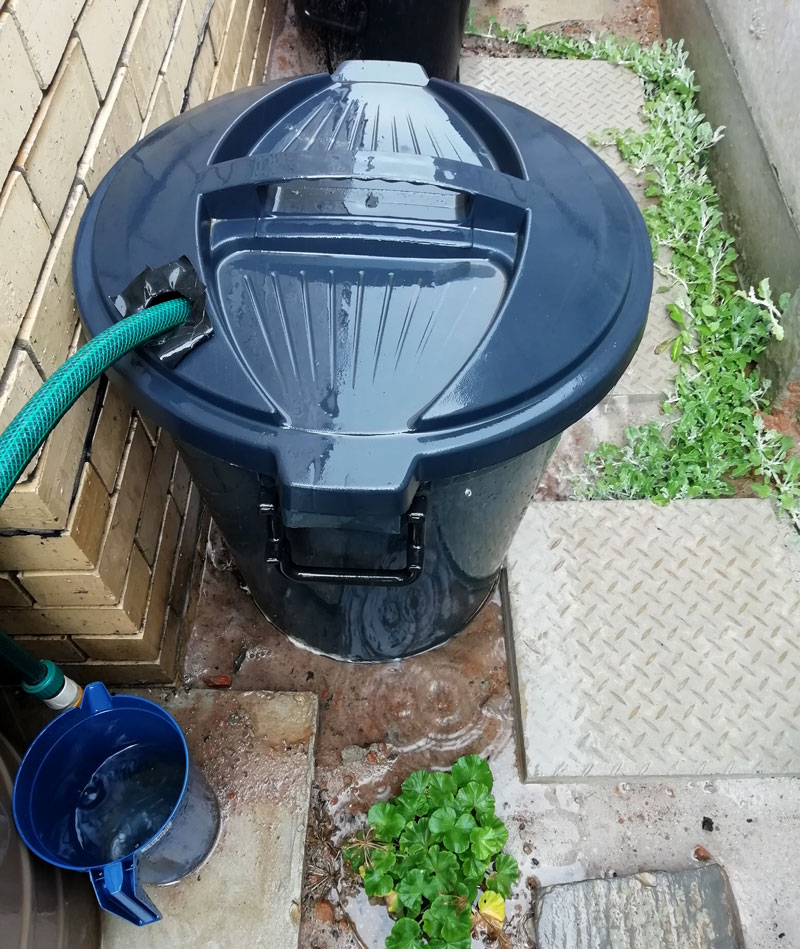
My overflow bin is overflowing!

My overflow bin is overflowing! Seems autumn is here. It’s been pouring with rain since early this morning. Feels surreal after all this hot, dry, windy weather. Having a little trouble switching off my internal “GO GET THE BUCKETS AND FILL ALL THE CONTAINERS” alarm.

Backyard wildlife

I got the concrete removed from our backyard. At the moment the biggest plant is the dusty miller, and it’s just flowered, and is popular with the bees. I watched this one do a complete grooming session and then tuck into the flower 🙂
The Bullet

We’ve been living in Costa da Gama for about a year and a half now. It’s quite a change from Woodstock. For example, about a year ago, we found a small and unexpected hole in the roof above my writing room.

This was the hole before we patched it over.

We’d just had work done on that part of the roof and had inspected it thoroughly, and this was definitely a new hole. I suspected it was a bullet hole, partly because the taxi war in the area had been heating up and it’s not unusual to hear shots fired.

Well – today I found the bullet.

I found it behind the compost bin, next to the wall just  under where the hole had been. It must have gone through the roof, and then down the outside of the wall. If it had gone just 5 cm to the right, it would have come out into my writing room and gone through the budgie cage.

Just as well it didn’t.


The Dragon Girl

A fairy tale that came to me when I was supposed to be writing something else… 

Once there were two dragons. They lived in a cave quite close to a village. This was lucky for them because they were both getting old and could no longer fly long distances to find food. Every now and then one of them would float down the mountain on the evening breeze and pick up a cow, or a sheep, or a villager for their supper.

More

Through the windscreen from Cape Town to Durban

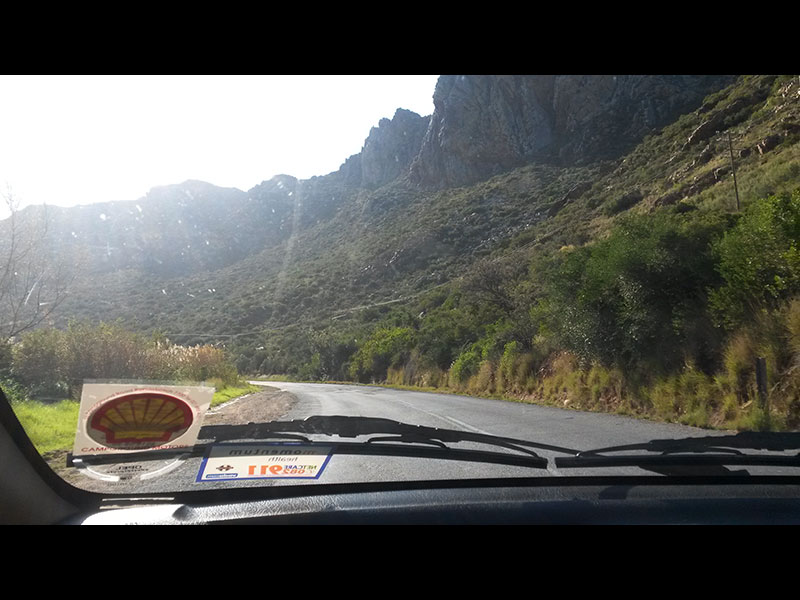
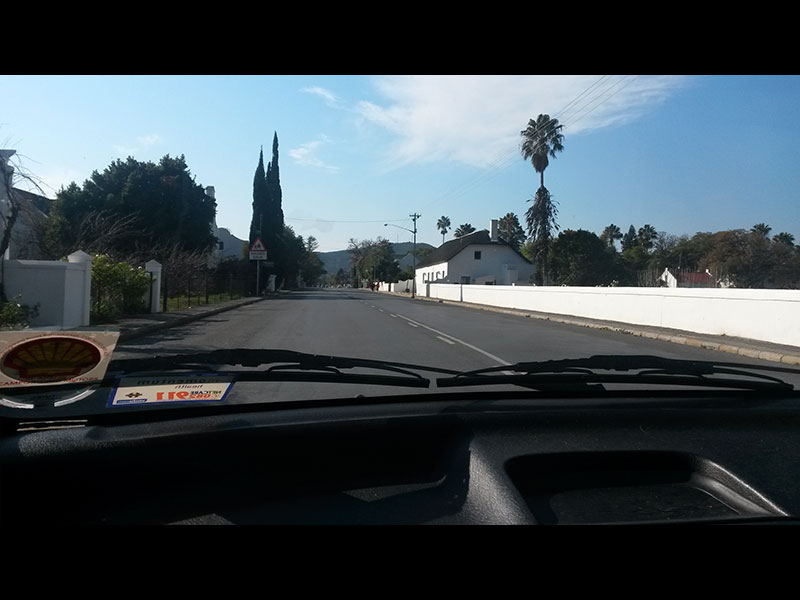
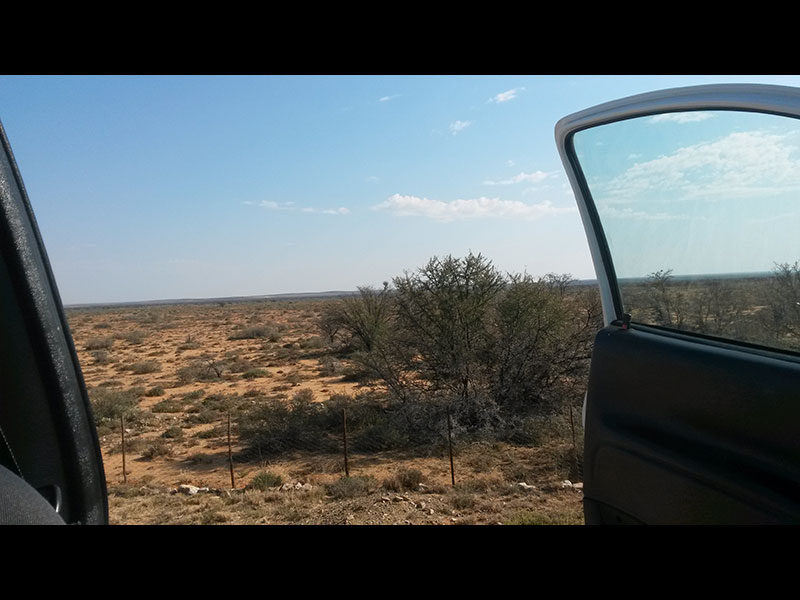
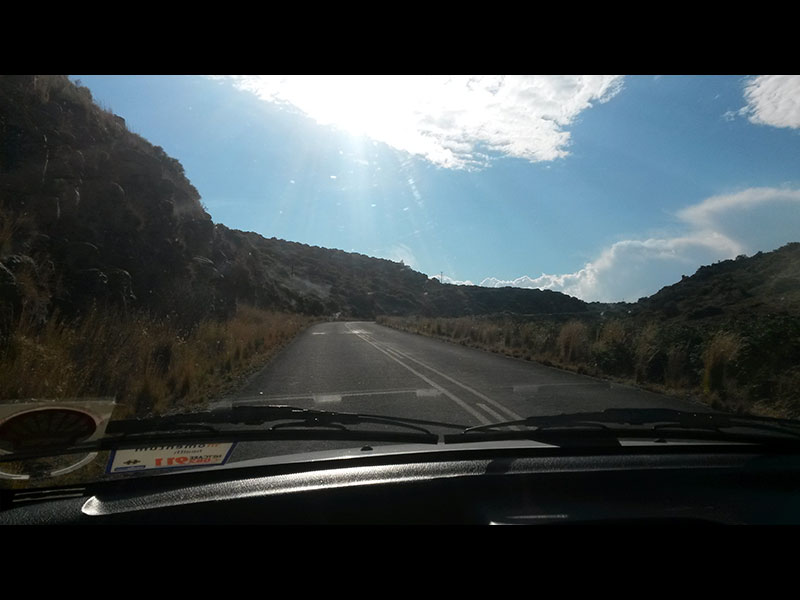
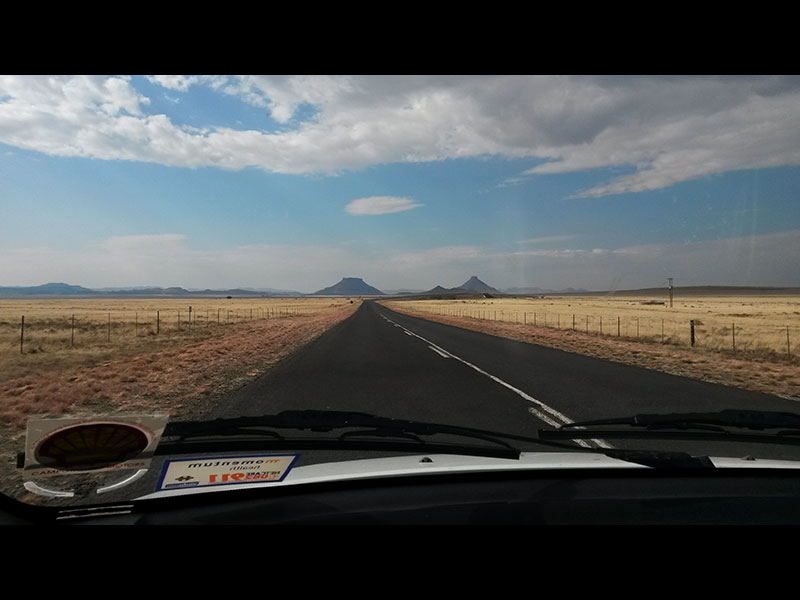
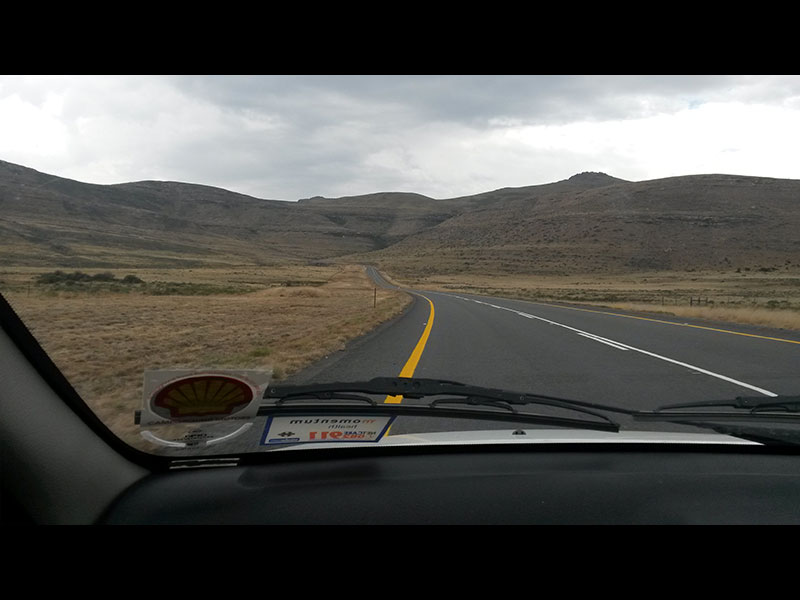
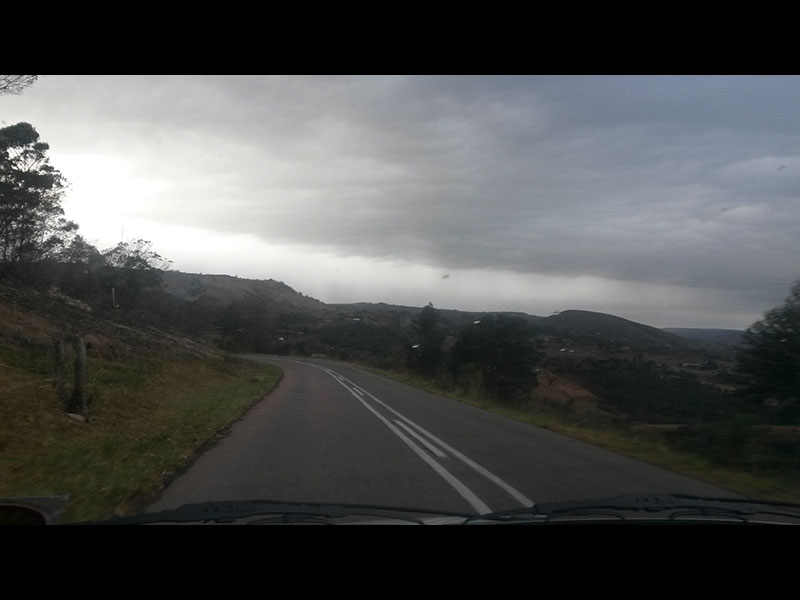
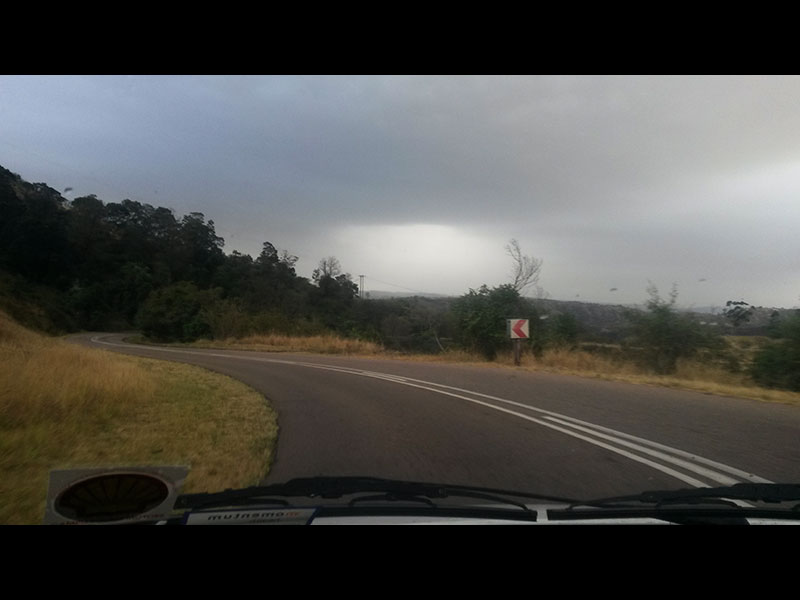
Some pictures taken through the windscreen en route from Cape Town to Durban, and a few from the journey back again. We took four days to get there, and three days to drive back again. Unfortunately the photos of the most beautiful part (through the Swartberge) came out all blurry so I had to leave those out.  The map of our route is right at the end.

11_0711_1011_2111_2814_0614_2614_2714_28day2_10_18day2_12_02day2_12_03day2_14_30day2_14_38day3_11_57day3_13_32day3_11_55day4_08_28day4_08_27day6_14_29day7_16_47

route_to_durban

Cape Town Carnival: Chameleons, Dragons, and Pirates :)

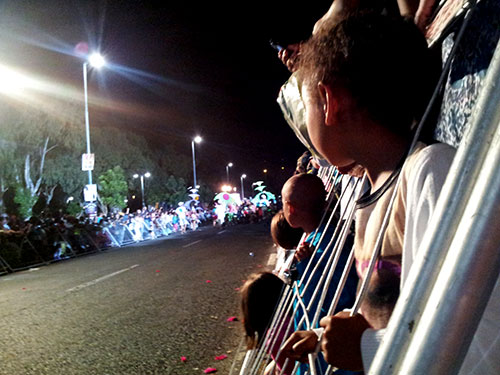
We went to the Cape Town Carnival last night. It was fabulous!  It was a warm, windless evening, everyone seemed happy and relaxed and the floats were just awesome.

kids

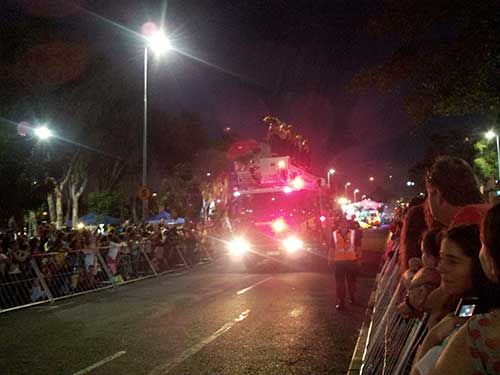
The first real display were these fire-fighters perched on top of their truck, showing off their muscles. You can’t really see in the shot, but they were posturing up there with their shirts off.  That is, the men did. The female fire fighters sat on the truck, looking unimpressed. 🙂

fire_truck

Many of the costumes had lights inside, like this floral skirt:

flower_skirt

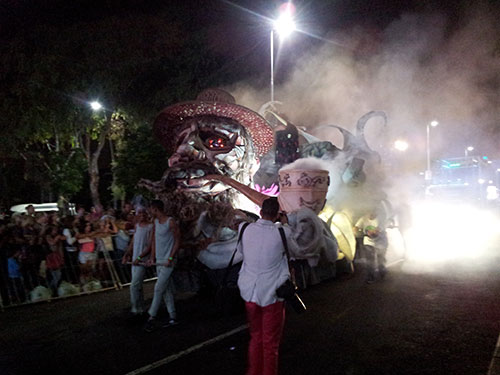
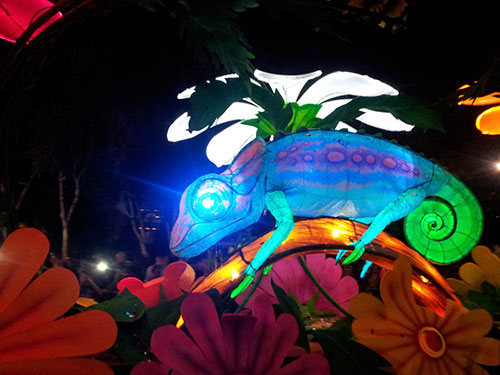
This was one of my favourites: a magical chameleon. He was huge:

chameleon

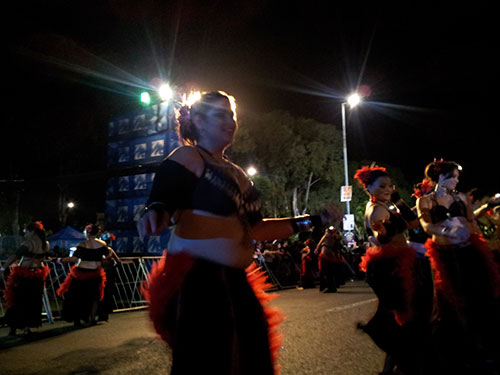
Each float had a troop of dancers behind it. None of my photos of them really came out that well:

belly_dancers

This was another great one. Van Hunks and the devil. You can’t really see the devil, but he stood on the float looking awesome in a great big horned headdress. (Van Hunks is the guy who sits on table mountain and smokes a pipe, causing all the clouds.)

van_hunks

A skinny elephant 🙂

skinny_elephant

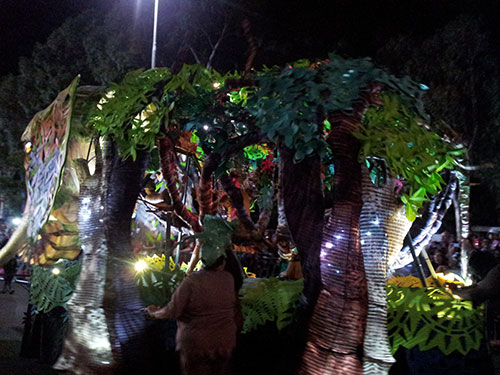
This elephant float is probably the loveliest one. There are people inside making the legs walk, and its body is made of foliage:

elephant

elephant_back

These guys were awesome too. They balanced the drums on their heads and drummed as they walked.

drummers

This float reminded me of that scene in Asterix and Cleopatra, where Cleopatra decides to tell Julius Ceaser what’s what:

cleopatra

And these wonderful pirates and sea-creatures. The pirates had sparkly red hearts visible through their ribs.

pirates

Some glowing dragons and sea-creatures:

big_dragon

dragon

And that’s that! It was a great evening. Such a good vibe.

Shower Songs: we are back!

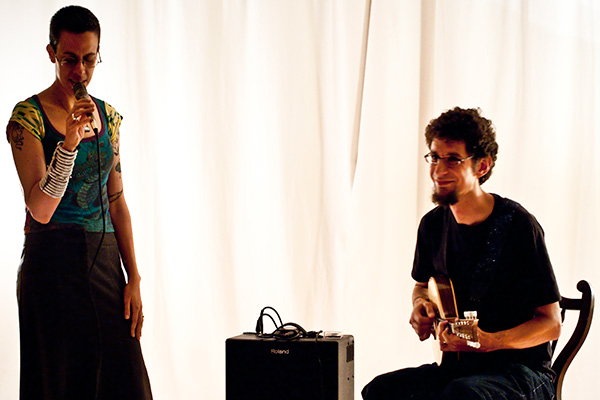
I’m can’t wait: Shower Songs will be playing at the Voorkamer Festival in Darling, next weekend.  In case you don’t know, Shower Songs is what we call our duo – Brendon plays the Mandolin, and I sing.  Folk songs, blues,  pop, anything, really, as long as it’s the kind of thing you might sing in the shower 🙂

Photo by Niklas Zimmer

The Voorkamer Festival sounds amazing. The performances take place in people’s homes  From their site:

“Darling taxi drivers take festival visitors from home to home on a number of set routes – each route features three homes and three performances. The beauty of this format is the surprise element: Visitors don’t know beforehand which performances they will see on their route, nor which homes they will visit. It’s an exciting and unpredictable cultural experience with a difference!”

You can read more about it at the Voorkamer Festival site.


Photo by Niklas Zimmer

Previous Older Entries