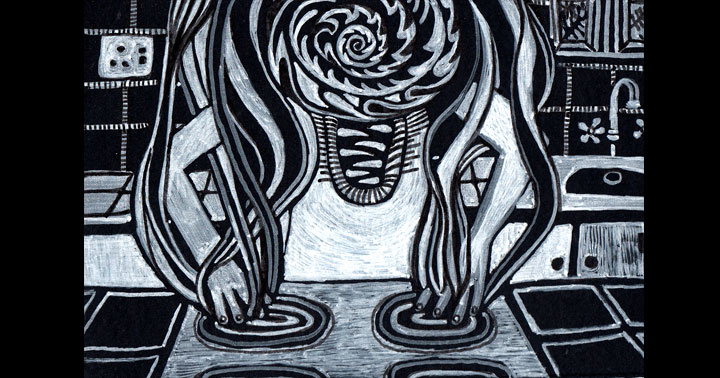
There is a way of thinking about anger that makes it more difficult to let go of anger: If you believe that anger is bad and dangerous, that angry people are usually bad people, and that anger is only justified if the situation is extreme.
If you believe that a good person will only get angry at something really bad.
If you believe that a person who gets very angry at a comparatively minor thing, is a bad person.
It works like this:
Something happens that makes you very angry. According to your beliefs, if that thing is minor, your anger means you’re a bad person.
That hurts a lot.
It’s easier to tell yourself “the thing is not minor, it’s terrible! I’m justified in my anger” than to tell yourself “My anger is justified, because it’s OK to be angry, but my anger is out of proportion, because the thing is minor”.
Now you’re ruminating and fighting with yourself because some part of you knows that your anger is out of proportion to the thing that triggered it. And according to your (false) belief, that mean you’re a bad person. You find yourself reciting a litany for anger, over and over again.
In order to continue believing that you’re not bad, you have to continue believing that the thing that made you angry is unforgivably bad.
So you stay angry.
The alternative is to accept that emotions are a inaccurate gauge for what’s happening in reality. You can get very angry at a minor thing.
That doesn’t make you a bad person, it’s just a fact.
It can help to accept that sometimes, anger is out of proportion to the thing that triggered it. You don’t choose it, so it’s not evidence that you’re bad or cruel or selfish.
The anger is trying to protect you. Sometimes that is good and necessary (when the thing that made you angry really is bad) but often it’s not.
It’s like a little child who can’t get the adults to listen to them, unless they shout really loudly. It cares about you and is trying to warn you of danger. But it’s a little kid and can’t tell the difference between a crisis and an inconvenience.
Thank your anger for alerting you to a potential danger. Decide for yourself if there really is anything dangerous. Being extremely angry at something trivial doesn’t make you a bad person, even if other people can tell that you are angry.
This is true for everyone, but especially relevant if you are neurodivergent. Rejection Sensitivity, Demand Avoidance, and big emotions are a common experience for those of us who are Autistic or ADHD.










 Masha du Toit
Recent Comments