Autism is like a fever

Many late realised autistic people like me struggle with the question of how we can ever know if we are really autistic. Even if we do extensive research, and all the descriptions of the autistic experience and traits resonate with us, we still doubt.

Some of us don’t have access to official diagnosis, and many of us still doubt even when we are diagnosed as autistic. Maybe we’re faking our traits? Are we impostors? Can we really call ourselves autistic if were not 100% sure?

I’m hoping that some of that doubt can be alleviated going back to the basics, and examining what autism actually is, and how its defined and diagnosed.

The tl/dr: there is no hidden neurological dial pointing to “autistic” or “neurotypical”. Autism is defined by the traits. If you have the traits, strongly, and there is no other clear cause, you are autistic.

What is Autism

Autism is a neurological difference. Our brains and nervous systems are different from neurotypical peoples’. Because of this difference, autistic people behave differently and experience the world differently in a particular pattern. Those differences are called “autistic traits”.

Broadly speaking, autistic traits fall in three categories: differences in social interaction, differences sensory perception, differences in how we process information, and set patterns of behaviour.

  • Difficulty with making eye contact is a well known autistic trait. That’s an example of a difference in social interaction.
  • Many autistic people struggle to concentrate in a noisy environment, which is an example of a difference in sensory perception.
  • Autistic people often gain great joy in learning about a topic they are especially interested in, and telling others about it. This is a difference in processing information.
  • An example of a set pattern of behaviour is when a person eats exactly the same food every day, prepared in exactly the same way.

This is a gross simplification of the patterns of autistic behaviour and experience. I’ve included a link to more nuanced approaches at the end of this article.

Autism was first identified when we realised that many people have this broadly similar pattern of behaviour and experience. We know that autism is caused by our brains and nervous systems being different, but that brings up several questions.

  • How is an autistic person’s brain different from a neurotypical person’s?
  • What causes this difference?
  • What is the result of this difference?

We can only answer the last of these three questions. The result of our neurological difference are the autistic traits. Since we don’t know exactly what the differences are on a biological level, and we don’t know what causes them, the only way to diagnose autism is through identifying autistic traits.

How is an autistic person’s brain different?

Although we know that there are biological differences between autistic and neurotypical people’s brains, we can’t use a brain scan, or a blood test, or a genetics test to diagnose autism.

Scientists have detected areas of difference in some autistic people’s brains, that show up on brain scans, but none of these differences are present in enough autistic people, and not present in enough neurotypical people, for us to be able to use them as a diagnostic tool.

Similarly, while an autistic person is much more likely to have an autistic child, the genetic aspect of autism is complex. There is no single “autism gene”. Instead, there is a complex pattern of genes that, when they appear together, make it much more likely that a person is autistic.

Once again, the pattern is not clear or predictable enough for us to be able to use the presence of those genes are a diagnostic tool. Many autistic people don’t have those genes. Many neurotypical people do.

There are many theories of how autism manifests in the brain. Some examples are the “intense world theory”, monotropismsignalling imbalance, and connective theory among others.

The fever analogy

There are many theories about what causes autism. None of them explain all aspects of autism, or apply to all autistic people. The autistic traits could be caused by any number of neurological differences.

Based on our current understanding of autism, the relationship between the autistic traits and the underlying biological cause of those traits, is similar to the that of fever.

We detect a fever by measuring a person’s body temperature. A fever is defined as having a temperature that’s higher than normal.

A fever might be caused by many different things. For example, a person might have a viral infection such as Covid 19, or bacterial infection such as salmonella, or an inflammatory condition such as rheumatoid arthritis. Many things can cause a fever.

A fever is not defined by its underlying cause, but the detectable aspect: having higher than normal temperature.

Autism is like fever. It’s not defined by its underlying cause, but by its detectable aspect: the autistic traits.

How is autism diagnosed?

Autism is defined by its traits.

If you have:

  • many of the autistic traits
  • you have those traits strongly
  • there’s no other clear cause for those traits

you are, by definition autistic.

That’s what autism means. There is no secret neurological dial that points to “autistic” or “neurodivergent”. There is only the presence, or absence of traits.

What are autistic traits?

Some of the autistic traits are listed in official documents like the DSM5 and ICD11 diagnostic criteria for autism. Many autistic traits are not included in those documents.

Note that the DSM5 and ICD11 diagnostic criteria for autism are not used to determine whether or not a person is autistic. They are tools to determine whether a person is disabled enough by their autism to qualify for accommodations and disability allowances. A person can be autistic, and not meet the criteria defined in these documents, if they don’t meet these documents definition of disability.

Some autistic traits are not included in these documents because they don’t occur often enough to be useful when diagnosing a person.

Some traits are not included in the official criteria because of the bias of autism science, which is based on how autism presents in a small subset of the autistic population: male, white, middle-class children in Western cultures.

Examples of autistic traits that are not included in the official criteria:

  • Many autistic people are trans, non-binary, or have other non-standard experiences of their gender identity.
  • Autistic people often don’t recognise the conventions of social hierarchy, and may not change the way they speak or behave to match their status in the eyes of others.
  • Autistic people often form emotional attachments to inanimate objects.

There is no autistic trait that all autistic people have. There is no autistic trait that no neurotypical people have.

For example, a well known autistic trait is a difference in making eye contact. There are autistic people who don’t have this trait, or who have taught themselves to hide this trait. There are neurotypical people who have this trait — they have differences in how they make eye contact, but they are not autistic.

No single autistic trait can prove, or disprove, that a person is autistic.

Autism is diagnosed by a person having many autistic traits, having them strongly, and there being no clear alternative explanation for those traits.

Autistic traits can be tested for using questionnaires, by being interviewed and observed by a trained professional, or by the person themselves doing research on autism, reflecting on their own experience, and spending time with other autistic people to see whether their share experience makes sense.

It takes training and experience to identify autistic traits in another person. This is because autistic traits are differentiated from symptoms of other conditions based on their internal experience, and not by their external presentation.

This is why informed autistic self diagnosis is just as valid as professional diagnosis by a professional.

What other conditions can look like autism?

Many autistic traits are symptoms of the trauma of being autistic. Autistic people have had their needs ignored or misunderstood from birth, causes long lasting trauma. Autistic people also often have very sensitive nervous systems, and so are far more likely to experience anxiety and stress disorders.

For this reason, all the mental health conditions and personality disorders that are associated with trauma have symptoms that overlap with, or look very similar to, the autistic traits.

Examples are cPTSD (Complex Post Traumatic Stress Disorder), PTSD, Borderline Personality Disorder and Narcissistic Personality Disorder, all of which are related to trauma.

Other conditions that can look like autism are Bipolar Disorder, Generalised Anxiety, and Social Anxiety. Of course, it’s also possible for an autistic person to have one or more of these conditions as well as autism.

It can be very difficult for an autistic adult to be correctly diagnosed as autistic. While there are benefits to having an official diagnosis, such as access for accommodations for work and school, official diagnosis might not be necessary in order to know whether or not you are autistic.

For more information on other aspects of autism, such as what is meant by the autistic spectrum, differences in empathy, the difference between autism and social anxiety, how to manage anxiety and autism, and what is meant by neurodivergent supporting therapy, here is a curated list of resources for autistic adults.
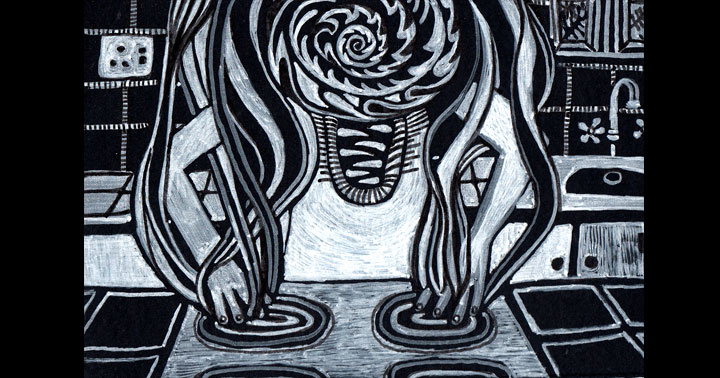
The Litany for Anger

A white on black drawing of a person with their hands on a stove. Smoke rises from the stove plates to obscure their face with a spiky spiral.

There is a way of thinking about anger that makes it more difficult to let go of anger: If you believe that anger is bad and dangerous, that angry people are usually bad people, and that anger is only justified if the situation is extreme.
If you believe that a good person will only get angry at something really bad.

If you believe that a person who gets very angry at a comparatively minor thing, is a bad person.

It works like this:

Something happens that makes you very angry. According to your beliefs, if that thing is minor, your anger means you’re a bad person.

That hurts a lot.

It’s easier to tell yourself “the thing is not minor, it’s terrible! I’m justified in my anger” than to tell yourself “My anger is justified, because it’s OK to be angry, but my anger is out of proportion, because the thing is minor”.

Now you’re ruminating and fighting with yourself because some part of you knows that your anger is out of proportion to the thing that triggered it. And according to your (false) belief, that mean you’re a bad person. You find yourself reciting a litany for anger, over and over again.

In order to continue believing that you’re not bad, you have to continue believing that the thing that made you angry is unforgivably bad.

So you stay angry.

The alternative is to accept that emotions are a inaccurate gauge for what’s happening in reality. You can get very angry at a minor thing.
That doesn’t make you a bad person, it’s just a fact.

It can help to accept that sometimes, anger is out of proportion to the thing that triggered it. You don’t choose it, so it’s not evidence that you’re bad or cruel or selfish.

The anger is trying to protect you. Sometimes that is good and necessary (when the thing that made you angry really is bad) but often it’s not.

It’s like a little child who can’t get the adults to listen to them, unless they shout really loudly. It cares about you and is trying to warn you of danger. But it’s a little kid and can’t tell the difference between a crisis and an inconvenience.

Thank your anger for alerting you to a potential danger. Decide for yourself if there really is anything dangerous. Being extremely angry at something trivial doesn’t make you a bad person, even if other people can tell that you are angry.

This is true for everyone, but especially relevant if you are neurodivergent. Rejection Sensitivity, Demand Avoidance, and big emotions are a common experience for those of us who are Autistic or ADHD.

Compassionate Practice

Listened to the “Compassionate Practice” episode of the Neurodivergent Woman podcast – useful for ND people of all genders. They discuss CFT – Compassion Focussed Therapy. Some things that really stood out for me: Anger and compassion are related and intertwined.

Also, the concept of the three systems that regulate our emotions – Threat, Drive, and Soothe. Each system is important, but it’s easy to fall into using “threat” or “drive” systems to regulate yourself rather than “soothe”.

Very briefly, the Threat System is when we use anxiety to motivate ourselves, and results in heightened adrenaline and cortisol.

Drive System is when we chase dopamine – exercise, playing games, getting into arguments (anger releases dopamine too).

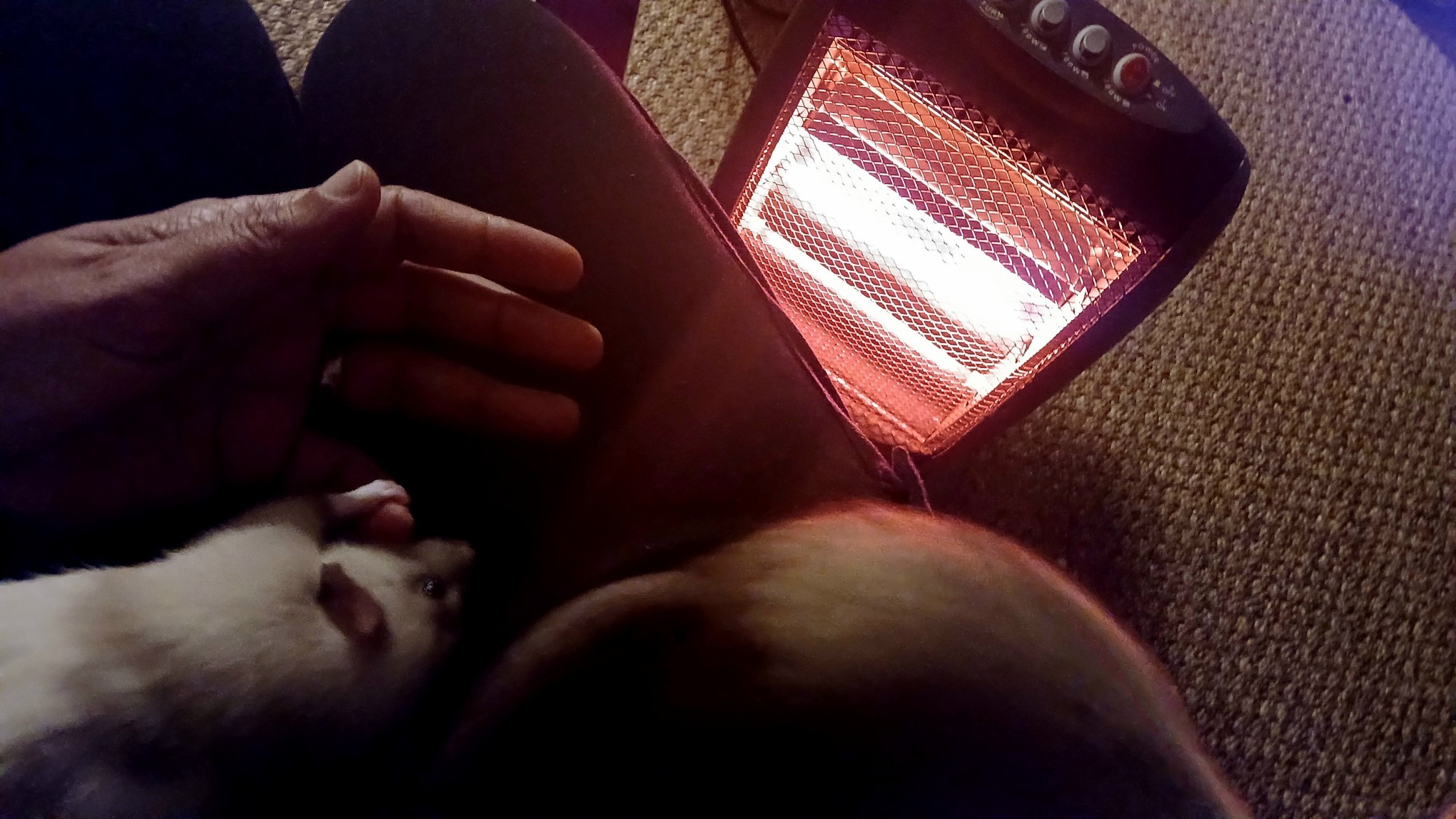
Soothe System is activated by being compassionate, doing soothing activities that release serotonin or oxytocin. Cuddling with a pet, reading a good story, having a warm bath, listening to nature sounds etc.

Each of these can be very useful – being a bit anxious about a deadline can help you meet it, for example. And going for a run or cycle, or playing a game to you enjoy is also good and useful.

But it’s easy to fall into unbalanced habits and rely on Threat and Drive only, and neglect Soothe.

The podcast has some practical examples of how to activate that soothe drive, but here are some of mine:

Me sitting in front of a glowing infrared heater with two rats on my lap. One of them has hold of my little finger and is cleaning it.

Sitting in front of a heater with my rats. This is Dash, giving me a manicure.

A white table with a number of small, multicoloured, rounded pebbles arranged by colour from olive green to rusty red, through cream, pink, and grey.

Sorting things by colour. These are pebbles I picked up on a beach in Datça.

A stretch of fynbos shrubs under a pale blue sky streaked with clouds.

Being outside in nature. This is a view of the top of Constantia Neck, just before the reservoir.

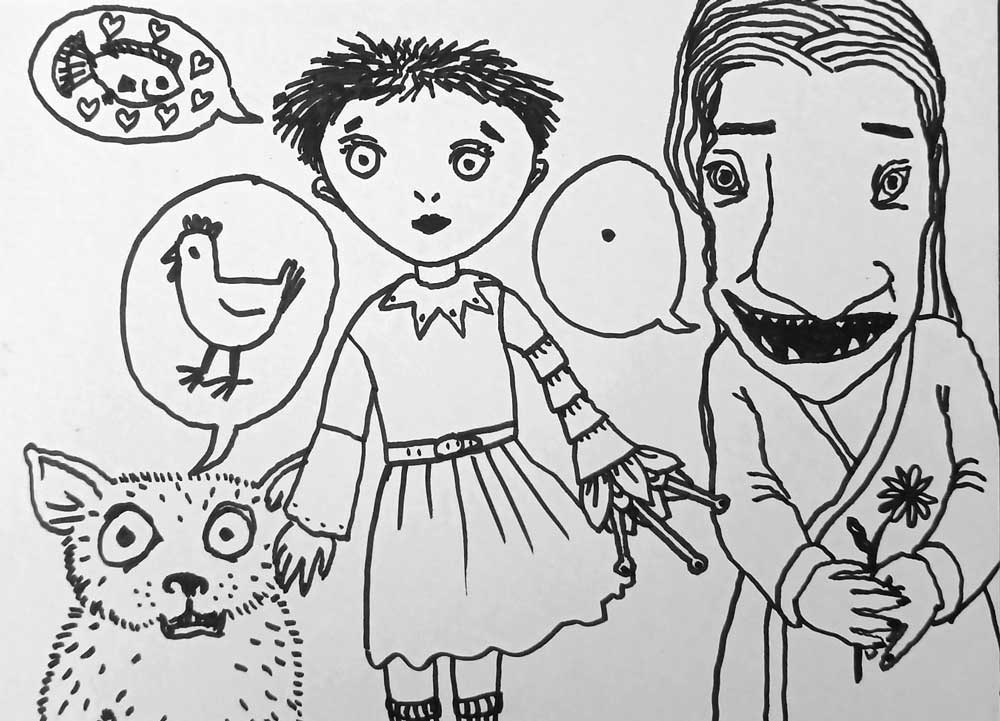
When Seeing A Good Friend In Public

Black and white line drawing. Two people and a hairy cat like creature with big eyes. The cat like creature has a speech bubble containing a chicken. One of the people has short hair and a wistful expression, and one of her hands is a flower.

Autistic thoughts when seeing a good friend unexpectedly in public:

OMG that’s Friend, yay!

They’ve spotted me, can’t hide. Initiate greeting.

OK, greeting is complete, now what do I say?

Was that a strange thing to say?

How long should this conversation last?

OK that was an odd thing to say, they’re looking confused.

Would it look rude if I say “Bye” and walk off now?

How should I end this conversation?

Do they still want to talk or are they trying to end this conversation?

Should I start talking about that thing, or will it take too long?

Maybe I should start end-of-conversation-sequence or is it too early for that?

OK looks like it’s wrapping up.

I think

Yes! Conversation is ending. Initiate end-of-conversation-phrases and timing.

Conversation successfully ended. Walk away.

Why did I say that thing?
Did they think that I was being odd?
Why did I say that thing?

Resources for Adult Autistic People

I recently realised that I’m autistic. Here are the resources I found valuable in figuring out what this means. All of these links are about autism in adults, which can be a challenge to find. Where possible I’ve prioritised resources created by neurodivergent people. 

Who is on the Spectrum?

Why it’s nonsense to say that everyone’s a little bit autistic

One of the distinguishing features of autism is what the DSM-V calls an “uneven profile of abilities.” There’s a reason people like to say that “if you have met one person with autism, you’ve met one person with autism.” Every autistic person presents slightly differently.

That’s because autism isn’t one condition. It is a collection of related neurological conditions that are so intertwined and so impossible to pick apart that professionals have stopped trying.

The Neurodivergent Woman podcast: Overlap between Autism and ADHD

Self Diagnosis, Misdiagnosis and Imposter Syndrome

Reasons why autistic people self diagnose

The medical system has long focused on young, white boys — at that, often cisgender, heterosexual, and from families with money — who exhibit very specific autistic traits when it comes to research, diagnosis, and accommodations. This excludes everyone else, and means the most prevalent information we have only helps part of the community. As a result, the more intersections of oppression an autistic person exists are, the more difficult it can be for them to get a professional diagnosis.

Self Diagnosis: but isn’t it harmful?
Self diagnosis is not a uninformed, spontaneous decision. It is not done without thoroughly educating oneself first.

Why it’s helpful to know whether or not you are autistic
Instead of looking over strengths and challenges and feeling strange or different from others but not knowing why, they gain a system for understanding certain patterns of feeling and responding.

Adult autistic people are frequently misdiagnosed as having mental health conditions before they’re diagnosed as autistic
This post is about the hundreds and thousands of autistic people who are misdiagnosed everyday by psychiatrists, psychologists, and other professionals.

Aging with Autism

Seniors across the country deal with numerous physical and mental health conditions every day that have been heavily studied, but there is not nearly as much research on the experience of those who are on the spectrum. Better understanding what autism looks like in seniors and how it may impact their lives can help make a difference for both them and their families.

How to deal with autistic imposter syndrome
Many of us who are autistic have had that sinking feeling that we may have been faking autism in some way, misappropriating a diagnosis that we do not deserve or fearing we have been misdiagnosed.

Interacting With Others: Masking, Empathy and Social Anxiety

Thin Slicing: Autistic people and first impressions
Thin slice judgements are those first-impressions that people make that continue to define and influence how a person feels about someone. Research has shown that these judgements are disproportionately negative for autistic people and that non-autistic people have an instant dislike of them.

Autistic Masking
Masking is a social skill that persons with autism adopt in social settings in which non-autistic people expect non-autistic behavior. Examples include faking eye contact, mirroring, minimizing, and disguising behaviors and feelings. Autism masking has been documented to cause stress, depression, and other mental health and identity issues.

Double empathy problem: miscommunication is a two way street

How autism may affect sympathy and empathy
Research into the link between autism, empathy, and sympathy has evolved over the past 40 years. Initially, it was believed that a lack of empathy and sympathy was a universal trait of autism, but more recent research indicates that this varies among individuals with the condition.

The questions of whether people with autism truly empathize or sympathize with others, what stands in the way of a traditional response, whether this can be taught, and whether an apparent lack of empathy or sympathy really reflects a lack of emotional connectedness are more nuanced than early research suggests

How to tell the difference between social anxiety and autism

Neurodivergent insights on the overlap between social anxiety and autism

Managing the kind of social anxiety that autistic people can have

Regulating Emotions and Sensory Input

Autism, interoception and alexithymia
Many of the stereotypical assumptions about autism (for example, that we struggle with empathy, theory of mind, emotional identification, and reciprocity) are actually better explained by alexithymia and are not intrinsic to autism itself. Today’s article will provide an overview of the Autism-Alexithymia overlap and then talk about the differences between autism and alexithymia. First, let’s dive into the overlap.

Strategies for improving poor interoception
To put it simply: a person can not consistently self-regulate when their interoception system is dysregulated. As a Psychologist, I learned so many “emotional regulation strategies” that often seem misattuned to my neurodivergent clients. It wasn’t until I learned what interoception is that I began to connect the dots. Many of the emotional regulation strategies that I had learned do not effectively work when there are underlying interoception issues. For this reason, it’s important to consider interoceptive awareness as part of any therapeutic work.

How to Improve Vagal Tone and Why It’s Important
We all want to be more present, flexible, and grounded people. Sometimes, it seems that it comes so naturally for some people, while many of us struggle everyday. If that sounds like you, I’m here to tell you that there’s a reason for this and that you can become more grounded and engaged, too. Specifically, we do this by learning how to increase our vagal tone.

How To Meditate When You Can’t Sit Still

If you would like to meditate but think that you can’t, or you’ve tried and found it really difficult, this blog post is for you. I’m writing with autistic and ADHD folks in mind, who can often find it particularly challenging even though we’re often recommended it to help our wellbeing.

Neurodivergent Woman podcast: Alexithymia and Interoception

Stimming. What it is, and why it’s important and beneficial

Neurodivergent Woman podcast: Repetitive Behaviours

The benefits of autistic special interest
But it’s only in the past decade or so that autism professionals have begun to recognize the value of these intense interests that emerge in early childhood. Clinicians have historically called them circumscribed interests, and they belong to the category of diagnostic criteria for autism called “restricted, repetitive patterns of behavior, interests or activities,” which also includes movements such as hand-flapping and an insistence on rigid routines. A distinguishing aspect of special interests is their intensity: They can be so absorbing that they are the only thing the person wants to do or talk about.

Autistic and ADHD nervous system and stress response: increasing the window of tolerance

Music and the Vagus Nerve
The vagus nerve is in close proximity to the ear, through which we hear sound and music. When we listen to music, the vibrations of the sound resonate in the eardrums before traveling through the vagus nerve. Since the vagus nerve is associated with important physical functions like heart rate, taste, swallowing, and digestion, it’s closely related to the “rest and digest” PNS. When the vagus nerve is activated, it stimulates the PNS and sends a signal that it’s time to relax.

The needs of Autistic Library users
Autistic individuals are more likely to visit a public library than any other group and those with autism who do go to the library visit libraries twice as often. However, an autistic individual can feel shamed by those who do not understand their strange behavior or may become overstimulated by the library’s environment. Libraries and library systems that want to become autism-friendly can start by becoming educated on the challenges people with autism face and ways they can help. 

Autism and differences in stress responses, the sympathetic nervous system

Vision and hearing challenges with vestibular disorders
Interestingly, some patients with a vestibular disorder may also experience photosensitivity (discomfort with bright light) and other vision problems such as: intense discomfort with flickering lights, particularly fluorescent, sodium, or mercury vapor lights, moving objects, rows of similar objects, such as in grocery store aisles or lines of text on a page, or busy, high contrast patterns, such as polka dots or sunlight filtering through mini-blinds.

Hyper and hypo sensitivity to the 8 sensory systems

Video on the differences and overlaps between autism and ptsd 

Neurodivergent Woman podcast: Trauma

Autism and PTSD
Given the high rate of co-occurrence, it is more likely that missed diagnosis happens (vs. misdiagnosis). A missed diagnosis happens when a person’s PTSD is accurately diagnosed while their underlying neurotype (autism) remains missed. When they do co-occur this creates some additional complexity in the clinical presentation.

Demand Avoidance,
Autistic people may avoid demands or situations that trigger anxiety or sensory overload, disrupt routines, involve transitioning from one activity to another, and activities/events that they don’t see the point of or have any interest in.

Persistant Drive for Autonomy, an alternative view of Pathological Demand Avoidance.
The core of PDA is an anxiety-driven need for autonomy. PDA causes someone to avoid demands and expectations for the sole purpose of remaining in control. When faced with a demand (even a really minor one), PDAers can have extreme reactions.

Neurodivergent Woman podcast: Pathological Demand Avoidance

Rejection Sensitivity Dysphoria in Autism and ADHD
Rejection Sensitive Dysphoria, or RSD for short, is a common issue experienced by Neurodivergent (ND) people. It is thought to be caused by increased difficulty in regulating our emotions, which leads to an incredibly heightened experience of rejection.

Echolalia and other echo phenomena from the point of view of an autistic person

Neurodivergent Woman podcast: Neurodivergence and Therapy

Neurodivergent Woman podcast: Executive Functioning