So you might be autistic but how can you know for sure?

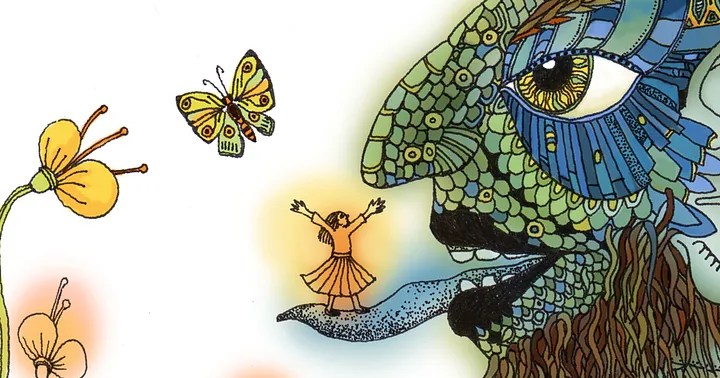
A drawing of a small person in a skirt standing on the tongue of a multicoloured, scale-covered bearded giant who's looking at a butterfly hovering over a flower.
Illustration: Explaining a butterfly to a giant

Here’s some advice for anyone who thinks they might be autistic but aren’t sure where to go from there. You might have done some online tests, like the RAADS H and read the DSM5 or ICD11 diagnostic criteria. And very probably you’re still not sure. Maybe you’re wondering if you should get screened for official diagnosis, which is intimidating process, can be expensive, and inaccessible to many.

I’ve been there, and here’s what I discovered: I don’t need an *official diagnosis that I’m autistic* to be sure that I’m autistic.

Fun fact: even officially diagnosed autistic people suffer from autistic impostor syndrome. For many, an official diagnosis of autism doesn’t provide the clarity they seek. They still wonder whether or not they were diagnosed correctly. Maybe they’re unconsciously faking their traits? Maybe something else is wrong?

So what then?

Unless you need accommodations for work or school, it’s more important to know whether or not you are autistic, than to get officially diagnosed as autistic.

I was lucky to have a psychologist who supported me in my self diagnosis journey. But what helped me most was spending time in autistic spaces online. For the first time in my life (and I’m 51 years old so that’s quite a lot of life) I met people who understood me.

Before I started talking to autistic people, there were so many parts of myself that seemed out of focus. I simply didn’t understand what was going on. I’d never met anyone else who spoke about those things.

Seeing person after person saying “yes, this exact same thing happened to me too, this is how it feels to me as well” was amazing. My understanding of myself snapped into focus.

For example, the autistic tests ask whether you copy characters on TV, to know how to socialise. That’s autistic scripting. I thought I didn’t script, because I didn’t copy TV characters.

But by interacting with other autistic people I realised that scripting is so much more than copying people on TV. That thing where I rehearse interactions with people beforehand? That’s scripting. Or where I quietly rehearse a phone call before I make it? Scripting.

Where are these autistic spaces? On mastodon there’s the actually autistic group @actuallyautistic@a.gup.pe and the #ActuallyAutistic hashtag.

On reddit, there’s r/autisminwomen which despite its name is not just for cis women, but open to trans and nonbinary as well. r/autism is also good, although there are some gatekeepers who disparage self diagnosis, so be aware.

If you are looking for resources for autistic adults I’ve collected a list of articles I’ve found useful here: Resources for adult autistic people
Drawing of yellow and blue flowers.

If you’re wondering whether autistic self diagnosis can ever be accurate:

Autistic self diagnosis is valid.

That’s not just a polite way to say “we will hesitantly accept self diagnosis while holding our noses” it means that you can accurately diagnose yourself as autistic.

The autistic diagnosis process is highly subjective and the reason why it requires a trained and experienced professional, is because the things that differentiate autistic traits from the traits of mental health conditions are very difficult to determine from the outside.

It’s the internal experience of these traits that determines what they are, and it’s difficult for a person to accurately judge another person’s internal experience.

You don’t have that problem. You have direct access to your own internal experience.

Getting an official diagnosis can be useful if you need accommodations for work or school, or if you won’t feel confident that you really are autistic without the validation of an official diagnosis.

Some people find an official diagnosis reassuring, some carry on doubting that they are “really autistic” even with an official diagnosis, so it really depends on your needs.

Some people hope a diagnosis will convince their family to take them seriously and believe that they are autistic. That doesn’t always work out, as people have an apparently infinite capacity to resist believing uncomfortable truths.

It’s also possible that you may be autistic, and still not get an accurate autism diagnosis because the diagnostic process is deeply flawed, especially for adults, people who were assigned female at birth, people who were assigned male at birth but don’t fit the masculine stereotype, and people who are not white.

If you just need to know whether or not you are autistic, the alternative to an official diagnosis, is informed self diagnosis. That is, doing your own research, and if you feel you need an outside perspective, consulting a therapist who is knowledgeable about neurodivergent people.

The University of Washington Autism Center says:

In our experience at the University of Washington Autism Center, many professionals are not informed about the variety of ways that autism can appear, and often doubt an autistic person’s accurate self diagnosis.

In contrast, inaccurate self-diagnosis of autism appears to be uncommon. We believe that if you have carefully researched the topic and strongly resonate with the experience of the autistic community, you are probably autistic.

If you want to learn more, here is an article that explains different aspects of self-diagnosis.

And to end with, a quote from Embrace Autism about Autistic self doubt and Autistic Imposter Syndrome:

We are lateral thinkers. Our superior lateral abilities generate multiple relevant possibilities for any problem. So we hypothesize what we might actually be and come up with many alternatives. Even if autism perfectly describes us, we may still have doubts because some of our behaviors can be attributed to other conditions.

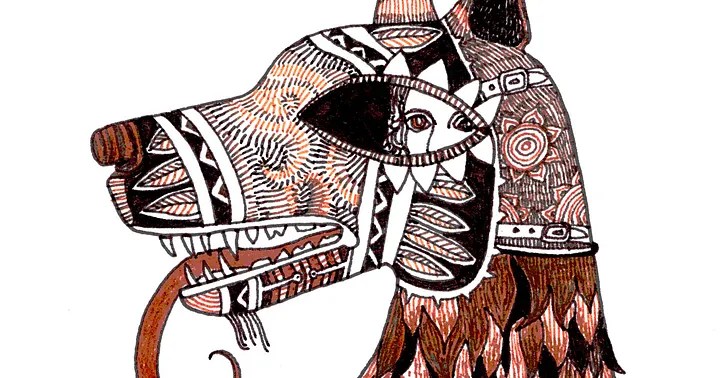
A drawing of a person peering out of the eye-hole of a dog shaped mask covered in patterns.