27 Jun 2008
by mashadutoit
in Animation
Tags: Animation, hayao miyazaki, laputa castle in the sky
How well do you remember the things that happened to you in childhood? Do you really remember what it was like? I think we mostly forget, and so do not realise how much children understand what is going on around them, and we underestimate their inner lives.
I have just come accross this interview with Hayao Miyazaki in which he touches on what motivates him to make the kinds of movies he makes. He was a child in Japan during World War Two, and he recounts an air raid that happened when he was four years old. The most traumatic part of this experience is not, as one might expect, the running away, or the bombs falling, or the fires they caused. What he remembers most painfully is this: His family were fleeing the fire bombs. There were fires everywhere and they got to their car – one of those old fasioned cars that start with a crank. They got it started easily “since it was warmed well by the fire”. Little Miyazaki was hidden under a futon because they would have to drive through the fire. Before they could drive off, a neighbour, a woman holding a small girl came up to them and asked if she could leave with them. But his parents just drove off, leaving her running after them, calling for help.
This woman and her child survived. But Miyazaki says:
“…the fact that we ran away riding a rare gasoline truck while others were dying, deserting even those who were asking us to take them with us, those facts remained as a very strong memory even for a four years old child. That was very difficult to bear, when you think about what people say about living right or being considerate toward others. And as a small child, you want to believe that your parents are good people, the best in the world.”
He goes on to say that he creates movies in which a child would speak up, and tell the parents to stop and help others. He wants to believe that such a world may be. Think of “Laputa – Castle in the Sky” with its terrible war robots that have turned into gardeners. Or the war images in “Howls Moving Castle”.
How often do you think of the impact of your actions or words on a child as small as that? That a small child could be so aware of injustice?
19 Jun 2008
by mashadutoit
in books
Tags: books, children's books, reading
Don’t you find some books are just MADE to be read out loud? Phrases stick in your head, and you can recite bits of them at will. How about “The Thirteen Clocks” by James Thurber:
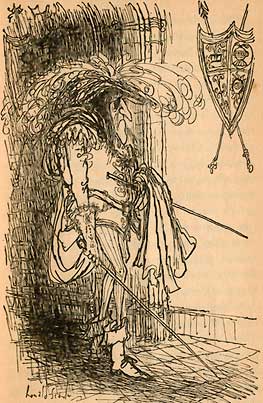
This is how it starts: More
16 Jun 2008
by mashadutoit
in Art, books, Colour, Illustration, Inspiration
Tags: children's books, chinese, fold tale, Illustration, molly bang
Dont you just love an excuse to sort through your book collections? To be paging through old battered survivors of childhood, as well as look at new discoveries. For me, one such new discovery is “the Paper Crane ” by Molly Bang. This little book is perfect. I love the freshness of the storytelling, the sensitivity and beauty of the artwork, and the quiet joy it radiates.

What could be a more satisfying medium for this story than to tell it in pictures made up of folded and cut paper and collage? More
14 Jun 2008
by mashadutoit
in books
Tags: arthur ransome, children's books, Illustration
Why is it that so many books that are loved in childhood are forgotten when we are grown? Many marvelous stories which are classified as “children’s books” are magical at any age. Of course there are children’s books that are the literary equivalent of coloured sugar popcorn – to be devoured by children, but heartburn inducing in adults. No – I’m talking about books that can be read and re-read at any age, and always gives you something more. One such an author is Athur Ransome, well known for his “Swallows and Amazons” stories.

He is another author who illustrates his own books. More
12 Jun 2008
by mashadutoit
in Art, Myself
Tags: doodles, insane art, outsider art
I’ve just come home from three days of meetings in Durban. All-day-long meetings. This time round I did most of my doodling between meetings, at the bed & breakfast. My doodles usually reflect my state of mind and I can usually remember what I was thinking when I did a drawing. Looking back on these, I’m not sure what I should conclude:
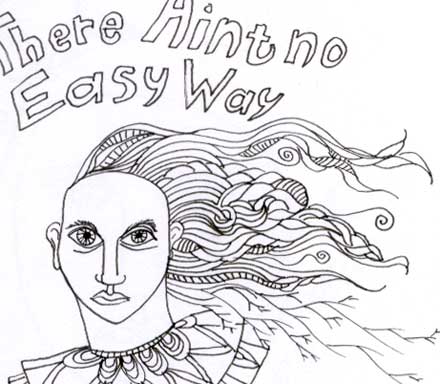
There aint no easy way was done before the first meeting. More
06 Jun 2008
by mashadutoit
in Art, books, Colour, Illustration
Tags: children's books, Errol le cain, Illustration, sleeping beauty
Isn’t it strange how some childhood moments stay with you so clearly, while most things fade into a half remembered muddle? It was just before Christmas, many years ago when I was just a little girl. My family were getting into the car to go home after a visit to the bookshop in Cape Town. My father was holding a brown paper packet. I tried to peep into it and caught a glimpse of two books, but my father whisked them away before I could get a proper look.

That packet re-appeared again under the Christmas tree, and contained Errol Le Cain’s Sleeping Beauty and Cinderella. More
03 Jun 2008
by mashadutoit
in Art, Colour, Illustration, Inspiration
Tags: arabian nights, children's books, Illustration, janusz grabianski, watercolor, watercolour
Did you also have books, as a child, that you read over and over again? The images become so familiar that you cannot imagine the story without them. This is, for me, the ultimate edition of The Arabian Nights. The text reworked by Hedwig Smola, translated into Afrikaans by Andre Brink and above all illustrated by Janusz Grabianski.
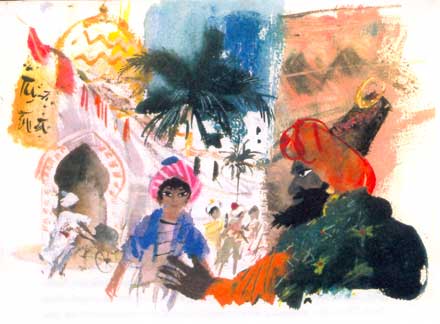
As a child I loved Grabianski’s vivid colours and strong brushwork – the storytelling in the pictures is just as lively as that in the text. Here you can see the first meeting of Aladdin with the evil magician, pretending to be his long lost uncle. More
02 Jun 2008
by mashadutoit
in Art, books, Illustration, Inspiration
Tags: drawing, Gormengast, gothic, Illustration, Mervyn Peake, Robert Louis Stevenson, Treasure Island, writer_artist
Inevitably I have come to Mervyn Peake. Mervyn Peake! That name casts a shadow. Have you read Titus Groan, or Gormenghast? Did you realise he was well known as an illustrator for such classics as Alice in Wonderland, and Treasure Island?
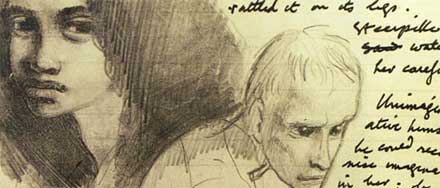
If you have not read him yet, Mervyn Peake is the master of true, dark goth. His creations live below the page, he sculpts his characters and crosshatches them with words. No one else writes, or draws, like Mervyn Peake.
More
30 May 2008
by mashadutoit
in Art
Tags: Art, art teaching, creativity, drawing, how to draw, how to paint, Jesse Breytenbach
I was reminded of this bit of wisdom by Jesse Breytenbach.
What my art teacher taught me: Make Mistakes.
When doing creative work – whether in the planning stages or in execution – don’t grip the steering wheel. Hold on with your fingertips and guide the process, allowing unexpected things to happen. Skill is in recognising happy accidents and making the most of them. A unexpected line may suggest the curve of a back, the turning of a head in a way you could never knowingly have contrived. Paint splatters, unexpected colour combinations – accidents can breathe life into your work.
My art teacher taught me: Make Mistakes
23 May 2008
by mashadutoit
in books, Colour, Illustration, Inspiration
Tags: children's books, children's illustration, cinderella, Errol le cain, Illustration
Here is a magical book for you to have a look at: Cinderella by Errol Le Cain. This process of sharing my favorite illustrators has helped me realise how profoundly they have influenced me . When I am asked what my influences are, I tend to think about serious fine artists. Audrey Beardsley maybe? But in all honesty, it is people like Errol Le Cain who have shaped the way I look at things.

I wish I could draw like Errol Le Cain! Here is Cinderella doing her embroidery under the watchful eye of her stepmother and stepsisters. More
20 May 2008
by mashadutoit
in Art, Inspiration, Opinions & reviews
Tags: bakgat, david kramer, south african music
Sometimes you meet a someone who can put your thoughts into words; who can articulate those vague opinions that have been bouncing around your head for years. The great South African musician, composer and songwriter David Kramer came to speak to our students today, and I kept wanting to stand up and shout “listen to him! LISTEN to what he is saying!”.
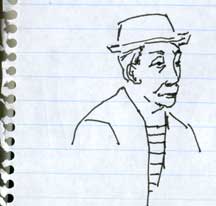
He is also very difficult to draw!
More
19 May 2008
by mashadutoit
in Art, books, Illustration
Tags: Add new tag, charles keeping, children's books, gothic, Illustration, poetry, the highwayman
Illustrator Charles Keeping had a dark side, always just beneath the surface of his work. Compare the work he did in “Joseph’s Yard” with “The Highwayman”, the famous poem by Alfred Noyes. The Highwayman is a satisfyingly Gothic love story of a highwayman and “Bess the landlords red lipped daughter”. You can read (or listen to) the poem here. The poem has a urgent rhythm that drives it along – its the kind of poem you feel compelled to read out loud:
The wind was a torrent of darkness among the gusty trees,
The moon was a ghostly galleon tossed upon cloudy seas,
The road was a ribbon of moonlight over the purple moor,
And the highwayman came riding—
Riding—riding—
The highwayman came riding, up to the old inn-door.
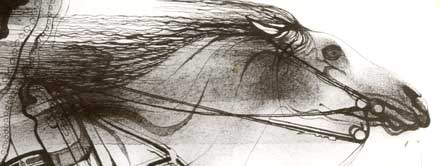
More
16 May 2008
by mashadutoit
in Art, books, Colour, Illustration, Inspiration
Tags: charles keeping, children's books, children's illustration, Illustration, josef se plant, joseph's yard, writer_artist
Charles Keeping was a powerful force in my childhood. I was scared and fascinated by his books . The drawings burn on the page, and the stories cut into your heart. I was deeply influenced by his drawing style – that muscular scrawl with ink and wash. In this post I want to share one particular book: “Joseph’s Yard” which I grew up knowing as “Josef se plant”, in its Afrikaans version.
 More
More
13 May 2008
by mashadutoit
in Art
Tags: Art, art advice, art teaching, creative process, creativity, drawing, my art teacher
I have learnt so much from so many art teachers. Some ideas that have become part of my personal “positioning system” as an artist. I will share these thoughts in this series of posts. This is my way of re-paying that debt in a small way.
What my art teacher taught me: Dont Be Scared
Whether you are painting, drawing, embroidering – whatever the medium – dont tiptoe around your own creation in fear of “messing it up”. You may feel the parts that work happened by accident, and that you cannot repeat them.
Fact: If you did it once, you can do it again. After all it was you who made it happen in the first place. Forget words such as “overworked”, “busy”, “labored”. You will learn more by pushing through than by hanging back. A space created by erasing what was there is richer than one which was never filled. With this comes the responsibility to be honest. Does it really work? If I re-do it, will it be better?
My art teacher taught me: Dont Be Scared.
P.S. I have since found this post at Laini Taylor’s blog. She writes about her creative process and ends off with:
— BE OPEN. Cast your imagination wide. Don’t be afraid to think of new things and go in whole new directions.
— BE BRAVE. New ideas may come to you now that will require a ton of new work. This can be overwhelming, but this is your chance to make the book the best it can be. Do whatever you need to do.
— BE EXCITED. Anything can still happen. This is marvelous. You can still dazzle yourself.
— BE DETERMINED. You can do it, and you will do it.
Previous Older Entries Next Newer Entries









 Masha du Toit
Recent Comments